
E911/X11CrMoWVNb9-1-1(T911/P911)seamless steel pipe

أنا. General Principles and Basic Description of Documents
1.1 Purpose and Scope of the Document
The purpose here is simple: to serve as a practical, from-the-trenches guide for the specification, production, and application of E911 seamless steel pipe. This isn’t a textbook for students; it’s a field manual for engineers, inspectors, and procurement specialists who are tired of boilerplate language.
It applies specifically to seamless pipes and tubes manufactured from the martensitic steel grade E911 (X11CrMoWVNb9-1-1), primarily used in the power generation and petrochemical industries. We are talking about the critical components—the main steam lines, the reheaters, the superheaters—where the pressure is high and the margin for error is zero. This material is the workhorse of the modern ultra-supercritical power plant, and treating it like common carbon steel will cost you millions in downtime.
1.2 Grade Comparison and Standard Basis
In the real world, nomenclature can be a minefield. You order P91, but the mill certificate says 10Cr9Mo1VNbN. You get E911, and the drawing calls for X10CrMoVNb9-1. It’s the same family, but the devil’s in the details. Here’s the breakdown from my dog-eared reference book:
-
ASME/ASTM Designation:T91 (أنبوب), P91 (ماسورة). The ‘T/P’ أمر بالغ الأهمية.
-
EN Designation:X11CrMoWVNb9-1-1 (Material Number 1.4905). Note the ‘W’ (التنغستن) – that’s the primary differentiator that gives E911 its superior high-temperature edge over standard P91.
-
Other Common Names:E911 (from the European standard), 9Cr-1Mo-V-Nb-N modified. Some old-timers still call it “the modified 9Cr.”
The core standards we live by are:
-
ASME SA-335/SA-335M:This is the bible for seamless ferritic alloy-steel pipe for high-temperature service.
-
في 10216-2:The European counterpart for seamless steel tubes for pressure purposes with specified elevated temperature properties.
I always keep a copy of VdTÜV 511/2 in my bag too. It’s a German standard, but its supplementary requirements for creep rupture testing are often more stringent and give you a better picture of long-term performance.
1.3 Definitions of Terms and Abbreviations
In the mill and on site, we don’t always use the fancy terms. Here’s the real-world translation:
-
UTS:قوة الشد القصوى. In the field, we just call it “tensile.” “What’d the tensile come back at?”
-
نعم:قوة العائد. هذا هو “yield point.” The line it crosses before it won’t snap back.
-
PWHT:المعالجة الحرارية بعد اللحام. Or as we often call it, “the big bake.” Get this wrong, and you’re welding butter.
-
δ-ferrite:The enemy. A metallurgical phase that kills toughness. We talk about it in hushed tones.
-
Creep:The slow, painful stretching of metal under stress and heat. It’s why we’re all here.
-
استعراض منتصف المدة:Mill Test Report. The piece of paper that either proves you’re good or gives you a headache. Never lose it.
ثانيا. Core Technology Requirements for Materials
2.1 Chemical composition control (smelting analysis + finished product analysis)
This is where the magic, or the tragedy, begins. The chemistry is the recipe. I’ve seen heats come in with perfect chemistry on paper, but the final product is brittle because of a tramp element or an imbalance in the residuals. For E911, the precision required is higher than a surgeon’s.
طاولة 2.1-1: Chemical Composition Requirements for E911 (وزن %)

| عنصر | ASME SA-335 (P91) | في 10216-2 (E911/X11CrMoWVNb9-1-1) | Why It Matters (The Field Engineer’s View) |
|---|---|---|---|
| الكربون (ج) | 0.08 – 0.12 | 0.09 – 0.13 | The backbone. Too low, and you lose strength. Too high, and you’re welding with a bag of headaches. I aim for the middle, حول 0.10-0.11%. |
| المنغنيز (من) | 0.30 – 0.60 | 0.30 – 0.60 | Deoxidizer and strength helper. We watch it closely with Sulfur. |
| الفوسفور (ص) | ≥ 0.020 | ≥ 0.020 | The impurity. We fight to keep it as low as possible. 0.015% max is my unofficial rule. |
| الكبريت (س) | ≥ 0.010 | ≥ 0.010 | Another impurity. It causes hot shortness. We run desulfurization hard in the melt shop. |
| السيليكون (و) | 0.20 – 0.50 | 0.10 – 0.50 | مزيل الأكسدة. Helps with high-temp oxidation resistance. |
| الكروم (كر) | 8.00 – 9.50 | 8.50 – 9.50 | The oxidation boss. Forms the protective scale. On the low side, you scale. On the high side, you promote delta ferrite. We aim for 8.8-9.1%. |
| الموليبدينوم (شهر) | 0.85 – 1.05 | 0.90 – 1.10 | Solid solution strengthener. It’s like rebar in concrete at high temp. |
| الفاناديوم (V) | 0.18 – 0.25 | 0.18 – 0.25 | Forms fine carbides/nitrides for precipitation strengthening. We call these the “workhorses.” |
| النيوبيوم (ملحوظة) | 0.06 – 0.10 | 0.06 – 0.10 | Also forms stable carbides. Fine-tunes the grain structure. |
| نتروجين (ن) | 0.030 – 0.070 | 0.040 – 0.090 | Critical for forming those V/Nb carbonitrides. We manage it tightly with V and Nb. A common rookie mistake is having a V/N ratio off. |
| النيكل (في) | ≥ 0.40 | 0.10 – 0.40 | Helps toughness, but too much lowers the Ac1 temperature, complicating PWHT. |
| الألومنيوم (آل) | ≥ 0.02 | ≥ 0.02 | A deoxidizer. But any Al over 0.02% will form AlN and tie up nitrogen, robbing the V and Nb. We use it as a tracer for bad deoxidation practice. |
| التنغستن (W) | Not Specified | 0.90 – 1.10 | The E911 Signature!This is what gives it the edge. Tungsten provides additional solid solution strengthening and slows down the coarsening of the M23C6 carbides. It’s the secret sauce for higher creep strength. |
| البورون (ب) | Not Specified | 0.0005 – 0.0050 | A trace addition, but potent. It segregates to grain boundaries, strengthening them and improving creep ductility. We measure it in parts per million (جزء في المليون). |
Personal Take:I was on a job in South Korea where a mill was having terrible impact test failures on P91. They kept fiddling with the heat treat. I asked for the melt data and saw their Nitrogen was consistently at 0.025%, just on the low edge of spec, and their Vanadium was on the high end at 0.24%. The V/N ratio was 9.6, way too high. You need enough N to form all those fine VN particles. We convinced them to target 0.05% ن. Problem solved overnight.
2.2 Heat Treatment Process Specifications
You can have the perfect chemistry, but if you mess up the heat treatment, you have a very expensive, very heavy paperweight. For 9Cr steels, the heat treatment is a three-act play: Normalize, Quench, Temper.
-
التطبيع (الأوستنيتية):Heat to 1040°C – 1090درجة مئوية (1900درجة فهرنهايت – 1995درجة فهرنهايت). Hold for a minimum of 30 دقائق. The goal here is to dissolve all the primary carbides and get everything into a solid solution. Too low, and not all the V and Nb go into solution, robbing your final strength. Too high (over 1100°C), and you get runaway grain growth and, you guessed it, delta ferrite. I’ve seen pipes normalized at 1120°C; the grain size was like coarse gravel, and the creep life was shot.
-
التبريد (تبريد):This is the “transformation” خطوة. It must be rapid enough to cool the entire wall thickness to below the martensite start (Ms) temperature before ferrite or bainite can form. For heavy-wall P91 pipe, this means a full water quench is often mandatory. Air cooling is only for thin walls. If you cool too slow, you get bainite, which has lower creep strength. The pipe comes out of the quench as hard, هش, untempered martensite.
-
هدأ: Heat to 730°C – 780درجة مئوية (1350درجة فهرنهايت – 1435درجة فهرنهايت). This is where we “take the edge off.” We precipitate those fine V/Nb carbides inside the martensite laths, which gives us our strength. And we temper the martensite itself to improve toughness and ductility. The tempering temperature is critical. Too low, and you’re brittle. Too high, and you’re approaching the lower critical temperature (Ac1), where you start to re-austenitize, forming fresh, untempered martensite on cooling. That’s a recipe for a brittle, low-toughness structure known as “overtempering.”
2.3 Mechanical Performance Indicators
The proof is in the pulling, the hitting, and the long-term stretching.
طاولة 2.3-1: Mechanical Properties at Room Temperature
| ملكية | ASME SA-335 P91 | في 10216-2 E911 | Field Acceptance Criteria |
|---|---|---|---|
| قوة الشد (RM) | ≥ 585 MPa (85 ksi) | 620 – 850 MPa | The EN range is tighter. I’m wary of anything over 800 MPa in the as-received condition—it can signal undertempering. |
| قوة العائد (Rp0.2) | ≥ 415 MPa (60 ksi) | ≥ 450 MPa | EN has a higher bar. |
| استطالة (أ) | ≥ 20% (for full wall) | ≥ 19% (طولية) | A measure of ductility. Low elongation means trouble. |
| صلابة (اتش بي دبليو) | ≥ 250 اتش بي دبليو (common spec) | 200 – 270 اتش بي دبليو | This is your quick field check. If you can’t get a hardness test below 250 غ.ب (ASME) or within the EN band, stop everything. |
| تأثير المتانة (CVN) | 27 J minimum @ RT (often specified) | 40 J average @ 20°C (for longitudinal) | This is the toughest (pun intended) spec to meet. Low toughness usually points to heat treat or chemistry issues. I’ve seen P91 with 200+ ج, and I’ve seen it with 10 ج. The difference is process control. |
2.4 Surface Quality and Internal Quality
-
سطح:Every inch of the pipe must be free from laps, الشقوق, طبقات, and other imperfections. We specify that any repair by grinding must result in a wall thickness still within the minus tolerance. Welding repair on the base pipe is a huge red flag and generally not allowed without specific approval. It tells me their process was out of control.
-
Internal:We are looking for laminations, الشقوق, and large non-metallic inclusions. This is where NDT comes in.
ثالثا. Dimensions and Weight Specifications
3.1 Dimensional parameters and tolerances
We don’t just order pipe; we order a specific geometry. The tolerances are tighter for these high-value alloys than for carbon steel. You can’t just have a “nominal” جدول. It’s all in the decimal points.
-
القطر الخارجي (ل):لمصادر القدرة النووية 4 وأكثر, ASME B36.10 gives a tolerance of +1/8 في., -1/32 في. for most schedules. For heavy-wall pipe, we often negotiate tighter, say +1.6 مم / -0.8 مم.
-
سمك الجدار (وزن):Typically ±12.5% of the nominal wall. But if you’re designing a header with a specific minimum wall for creep life, you must order to that minimum, not a nominal with a minus tolerance.
-
طول:Usually a range, with a specific tolerance on the ends for squareness. A poor end cut can ruin a weld setup.
3.2 Theoretical Weight Calculation
Theoretical Weight (كجم/م) = (ل – وزن) * وزن * 0.0246615 * Density Factor.
For steel, the density factor is roughly 1. For 9Cr steels, the density is around 7.78 جم / سم مكعب, slightly less than plain carbon’s 7.85. لذا, the exact formula for ordering is:
وزن (كجم/م) = (ل – وزن) * وزن * 0.0246615 * (7.78/7.85)
This matters because you pay for the theoretical weight. If the mill runs their pipe heavy on the wall (within tolerance), your tonnage goes up, and so does your bill. I’ve seen procurement fights over a 2% weight variance on a 200-ton order.
رابعا. Production Process and Control
4.1 Production Process Flow
Let’s walk the floor. For seamless pipe of this grade, the majority is made by the Mannesmann plug mill process or the hot extrusion process.
-
صناعة الصلب:It starts in the Electric Arc Furnace (القوات المسلحة المصرية) with strict control of scrap selection. Then it goes to a Ladle Furnace (LF) for fine-tuning the chemistry—adding those critical V, ملحوظة, ل, ب. أخيرا, Vacuum Degassing (VD) to remove hydrogen and oxygen. This is the most critical step for cleanliness.
-
Ingot or Billet Casting:Usually continuous casting into a round billet. The casting must be done under inert gas shrouding to prevent re-oxidation. Surface conditioning of the billet (طحن) is mandatory to remove any surface defects that would turn into seams in the pipe.
-
التدفئة & ثقب:The billet is slowly and uniformly heated in a rotary hearth furnace. Then it’s pierced in a Mannesmann piercer to create a hollow shell.
-
Elongating (Plug Mill):The hollow is rolled over a mandrel bar to achieve the desired wall thickness and OD.
-
التحجيم & استقامة:The pipe is sized to final dimensions and then straightened. This is a cold working step that can introduce residual stress if not controlled.
-
المعالجة الحرارية (N+Q+T):As described in section 2.2. The pipe is normalized, quenched (often with an external and internal water quench system), and tempered in a continuous roller hearth furnace.
-
التشطيب & تقتيش:قطع, de-burring, اختبار غير مدمر (يوتا, إدي تيار), visual inspection, والفحوصات الأبعاد.
4.2 Key Points for Controlling Critical Processes
Personal Anecdote: In the late 90s, I was at a mill in Germany that was one of the first to produce heavy-wall P91 for a project in the UK. They kept failing the UT inspection on the first few pipes. Internal cracks. The mill manager was pulling his hair out. We traced it back to the water quench. martensite, causing quench cracks. The solution was to slow the cooling rate slightly through the Ms temperature by adjusting the water flow and using a polymer quenchant. It was a hard lesson in physics.
-
Quench Control for Heavy Walls:For WT over 40mm (1.5 بوصة), the cooling rate is your biggest challenge. You need to cool the inside and outside fast enough to avoid bainite. This often requires dedicated internal and external quench systems. We monitor quench water temperature, معدل التدفق, and pipe temperature during quench using pyrometers.
-
Straightening Stress:Cold straightening after tempering is necessary, but it imparts residual stress. If you straighten too aggressively, you can exceed the yield point locally. We always measure straightness, but we also sample for residual stress measurement if the pipe is for a critical application. You don’t want your perfectly heat-treated pipe to warp during the first high-temperature service.
-
Grain Size Control:We aim for a fine, حجم الحبوب موحد (أستم 7 or finer). This is controlled by the normalizing temperature and time. Coarse grain means low toughness. We do metallographic checks on every heat.
V. تقتيش & Acceptance Specifications
5.1 Inspection Category Classification
Let me break this down the way we do it on the shop floor—three distinct categories: إلزامي, Supplementary, and For-Cause. I’ve seen too many procurement specs that just check every box on the list. That’s not quality control; that’s just burning money. You need to know where to put your attention.
طاولة 5.1-1: Inspection Category Matrix

| Inspection Item | Method/Standard | تكرار | Acceptance Level | Field Notes |
|---|---|---|---|---|
| الفئة أ: إلزامي (Every Heat/Lot) | ||||
| التحليل الكيميائي (Ladle) | ASTM E415 / ايزو 14284 | 1 per heat | طاولة 2.1-1 | This is your fingerprint. Keep it. |
| التحليل الكيميائي (منتج) | ASTM E415 / ايزو 14284 | 1 لكل 200 أنابيب | طاولة 2.1-1 | Check for segregation. I’ve seen centerline segregation kill toughness. |
| Tensile Test @ RT | ASTM E8 / ايزو 6892-1 | 2 per heat/lot | طاولة 2.3-1 | If the yield is too high, suspect undertempering. |
| اختبار الصلابة | أستم E10 / ايزو 6506-1 | 2 pipes per lot | 180-250 اتش بي دبليو (my range) | Your quick field check. I reject anything over 260 HBW on the spot. |
| اختبار التسطيح | ASTM A370 / ايزو 8492 | 2 per heat/lot | No cracks | Simple but tells you if the pipe is brittle. |
| اختبار الهيدروستاتيكي | ASTM A999 / ايزو 10332 | 100% | No leakage | معيار. But for heavy wall, we often waive this and rely on UT. |
| Ultrasonic Examination | ASTM E213 / ايزو 10893-10 | 100% | Quality Grade U3 | Catches internal lamination. Non-negotiable. |
| التفتيش الأبعاد | Calipers, Micrometers | 100% | ASME B36.10 | Wall thickness is where mills try to cheat. Watch the minus tolerance. |
| التفتيش البصري | Unaided eye | 100% | No laps, الشقوق, طبقات | If you see a repair weld on the base pipe, stop. Reject it. |
| Category B: Supplementary (When Specified) | ||||
| تأثير المتانة (CVN) | أستم E23 / ايزو 148-1 | 3 specimens per set | ≥ 40J avg @ 20°C | This is where good heat treatment proves itself. |
| Elevated Temp Tensile | أستم E21 / ايزو 6892-2 | 1 per heat | By design curve | For design data. We plot it against the ASME allowable stress. |
| Creep Rupture Test | ASTM E139 / ايزو 204 | 1 per heat (rare) | ≥ 100,000h life | The gold standard. Takes a year to get results. |
| Metallography | ASTM E3, E407 / ايزو 4967 | 1 per heat | Grain size ≥ ASTM 7 | I want to see tempered martensite, no δ-ferrite. |
| Micro-cleanliness | ASTM E45 / ايزو 4967 | 1 per heat | Thin series ≤ 2.0 | Inclusions kill creep life. Period. |
| Category C: For-Cause (Troubleshooting) | ||||
| Residual Stress Measurement | XRD or Hole-drilling | As needed | ≥ 80 MPa | If pipes warp during machining, check this. |
| Hydrogen Analysis | LECO / Inert Gas Fusion | As needed | ≥ 2 جزء في المليون | For sour service or heavy wall. |
| SEM/EDS Analysis | Fractography | As needed | ن/أ | When something breaks and you need to know why. |
5.2 The Critical Curves: What the Data Actually Tells You
I don’t just look at numbers on a page. I plot them. Every time. A single data point can lie, but a curve—a curve tells you the story. Here are the three curves I keep taped to the wall of my office.
5.2.1 The Impact Transition Curve (Ductile-to-Brittle Transition)
This is the first thing I ask for when toughness is a concern. For martensitic steels like E911, the DBTT (Ductile-to-Brittle Transition Temperature) should be well below room temperature. If it’s not, your heat treatment is wrong, or your grain size is too coarse.
CHARPY IMPACT ENERGY (ج) مقابل. TEMPERATURE (درجة مئوية)
===============================================================================
300 |
    |                                                   *
    |                                              *    *    *   Fully Ductile
200 |                                         *              Region (Upper Shelf)
    |                                    *
    |                               *                      (Target: >100J @ RT)
100 |                         *
    |                    *                                   * = Good Heat Treat
    |               *                                        o = Poor Heat Treat
 50 |          *                                       (DBTT too high!)
    |     *  س
    |  o    o
  0 |__o____o___o___o___o___o___o___o___o___o___o___o___o___o___o___o___
    -80  -60  -40  -20    0    20   40   60   80   100  120  140  160
                          درجة حرارة (درجة مئوية)
===============================================================================
Legend:
    * - Properly heat-treated E911 (DBTT ~ -40°C, Upper shelf ~220J)
    س - Improper heat treatment (DBTT ~ +20°C, Upper shelf ~80J)

Critical Observation:
    The 'o' curve shows DBTT at +20°C. في درجة حرارة الغرفة, this material
    is still in the transition zone. One cold morning, or a slight notch,
    and it fractures. I rejected a whole heat in Texas in 2003 for this.
What I look for:
-
Upper Shelf Energy: Should be > 100ج, preferably > 150ج. Low upper shelf means dirty steel or wrong temper.
-
دي بي تي تي: Should be below -20°C, ideally -40°C or lower. If it’s near 0°C, you’re living dangerously.
-
Transition Width: A sharp, steep transition indicates uniform microstructure. A drawn-out transition suggests mixed grain sizes.
Personal Story: 2005, a job in Alabama. P91 headers failing impact tests at 15J at room temperature. Mill certificate said “meets spec.” I asked for the full transition curve. They hadn’t run one. We ran it. DBTT was at +30°C! The material was fully brittle at operating temperature. The culprit? Normalizing temperature was too low—primary carbides hadn’t dissolved, so the matrix was lean and the grain boundaries were weak. We had to re-normalize the whole lot. Cost them six weeks.
5.2.2 The Creep Rupture Curve (Larson-Miller Parameter)
This is the truth-teller for high-temperature materials. You can’t wait 100,000 hours for test results, so we use the Larson-Miller Parameter (LMP) to extrapolate.
The Formula:
LMP = T (ج + سجل ر) x 10^-3

Where:
    T = Temperature (Kelvin)
    t = Rupture Time (ساعات)
    C = Material Constant (عادة 20-22 for 9Cr steels)
For E911, with its tungsten addition, the LMP curve shifts to the right compared to standard P91. That means higher stress for the same life, or longer life for the same stress.
STRESS (MPa) مقابل. LARSON-MILLER PARAMETER (C=20)
===============================================================================
200 |
    |   E911 (with Tungsten)
180 |      * * * * * * * * * * * * * * * * * * * * * * * *
    |         *   *   *   *   *   *   *   *   *   *   *   *
160 |            *                                         P91 (معيار)
    |               *   *   *   *   *   *   *   *   *   *   *
140 |                  *
    |                     *
120 |                        *
    |                           *
100 |                              *
    |                                 *
 80 |                                    *
    |                                       *
 60 |                                          *
    |                                             *
 40 |                                                *
    |                                                   *
 20 |                                                      *
    |                                                         *
  0 +----+----+----+----+----+----+----+----+----+----+----+----+----+
    18   19   20   21   22   23   24   25   26   27   28   29   30
                      Larson-Miller Parameter (x10^-3)
===============================================================================
Operating Point Example:
    600درجة مئوية (873ك), 100,000 hours
    LMP = 873 س (20 + log 100,000) x 10^-3
    log 100,000 = 5
    LMP = 873 س (25) x 10^-3 = 21.825 x 10^-3

    At LMP = 21.8:
        P91 allowable stress ≈ 65 MPa
        E911 allowable stress ≈ 82 MPa

    That's a 26% improvement. The tungsten matters.
What the curve tells me:
-
The Scatter Band: I don’t just want the average line. I want to see the individual data points. Wide scatter means poor process control.
-
The Extrapolation: We’re projecting from 10,000-hour tests to 100,000-hour life. If the curve isn’t smooth and well-behaved, I don’t trust the extrapolation.
-
ال “Knee”: Some materials show a change in slope at long times. That’s where the microstructure degrades. E911’s tungsten delays that knee.
Personal Story: 2010, a utility in the UK was requalifying their superheater headers for a life extension. Original P91, 150,000 hours service. They pulled samples for creep testing. The data points fell below the original design curve. Microstructure showed the M23C6 carbides had coarsened badly—they were like pebbles instead of fine sand. They had to de-rate the unit. Had it been E911, with its tungsten-stabilized carbides, they’d probably have gotten another 50,000 ساعات. That’s the difference between a capital expense and an operating expense.
5.2.3 The Continuous Cooling Transformation (CCT) Curve
This isn’t something you test on the final product. This is something the mill should have used to design the quenching process. But when I’m troubleshooting a bad batch, I ask for it.
TEMPERATURE (درجة مئوية) مقابل. TIME (ثواني) - CCT Diagram for E911
===============================================================================
1100 |
     |   Austenite Region
1000 |   ~~~~~~~~~~~~~~~~~~~~~~~~~~~~~~~~~~~~~~~~~~~~~~~~~~~~~~~~~
     |
 900 |                       Critical Cooling Curve
     |                      /
 850 +--------------------/--+-----------------------------------
     |  Ferrite Start   /    |
 800 |                /      |     Bainite Start
     |               /       |        /
 750 |              /        |       /
     |             /         |      /
 700 |            /          |     /
     |           /           |    /
 650 |          /            |   /
     |         /             |  /
 600 |        /              | /
     |       /               |/
 550 |      /                +-----------------------------------
     |     /                /  Martensite Start (Ms ~ 400°C)
 500 |    /                /
     |   /                /
 450 |  /                /
     | /                /
 400 |/________________/________________________________________
     |                 |
     |  Fast Cool       Slow Cool
     |  (إخماد الماء)  (Air Cool)
     |  100% Martensite  Mixed Microstructure
     |                  (Bainite + Martensite)
     |
  0 +----+----+----+----+----+----+----+----+----+----+----+
     1   2   5   10  20  50  100 200 500 1k  2k  5k  10k
                       Time (ثواني, log scale)
===============================================================================
Critical Observations:
    - To avoid ferrite formation, cooling from 850°C to 500°C must take < 120ق
    - For heavy wall pipe (>40مم), this requires internal + external water quench
    - If you get bainite, you lose 15-20% creep strength
My rule of thumb: For every 10mm of wall thickness, you need approximately 3-4 seconds of cooling rate control through the nose of the curve. A 50mm wall pipe needs to cool from austenitizing to below 500°C in under 20 ثواني. That’s aggressive. That’s why heavy-wall P91/E911 is a specialty product.
5.3 Acceptance Rules & Judgment
The standards tell you what to do when a test fails. Experience tells you what it means.
طاولة 5.3-1: Failure Mode Decision Tree
| Test Failure | Immediate Action | Possible Causes | My Field Decision |
|---|---|---|---|
| الشد – Low UTS/YS | Retest 2 additional samples | Underaustenitized (low normalizing temp); Overtempered | If retest passes, accept. If fails, reject heat. |
| الشد – High UTS/YS | Check hardness | Undertempered; Low tempering temp | If hardness > 280 اتش بي دبليو, reject. Can re-temper if caught early. |
| تأثير – قليل (<27ج) | Retest 3 specimens | Coarse grain; δ-ferrite; High Al/N | If average of retest < 40ج, reject. This is non-negotiable for me. |
| UT Indication | Rework area by grinding; Re-UT | Inclusion; Lamination; Crack | If depth < 5% وزن, repair. If >5% WT or crack, cut out or reject. |
| صلابة – عالي | Check tempering record | Furnace deviation; Wrong temper | Can re-temper ONE TIME. If still high, reject. |
| صلابة – قليل | Check microstructure | Overtempered; Mixed structure | Usually reject. Low hardness means low creep strength. |
| تسطيح – Crack | Metallography on crack | Embrittlement; Inclusion stringers | Automatic reject. This pipe is brittle. |
ال “One-Time Re-Temper” Rule:
I allow one re-temper. That’s it. Here’s why:
- First re-temper can correct an undertempered condition
- Second re-temper risks overtempering or even hitting the Ac1 temperature
- Multiple heat treatments coarsen the grain structure
I had a mill in Italy try to re-temper a batch three times. The hardness finally came down, but the grain size had grown from ASTM 8 to ASTM 4. The creep life was shot. We rejected 80 طن.
ال 5% Grind-Out Rule:
For surface defects, we allow grinding, لكن:
- Must blend smoothly (no sharp notches)
- Wall thickness after grinding must still meet the minimum specified (not just nominal minus tolerance)
- Area must be re-inspected by MPI or UT
- No grinding in the last 150mm of the pipe end (weld area)
If they grind through the minimum wall, that pipe is scrap. I don’t care if it’s just a spot. A thin spot under creep conditions is a failure waiting to happen.
5.4 Statistical Process Control (SPC) in Acceptance
This is something the standards don’t tell you, but I do it on every major project. I don’t just accept individual values; I look at the distribution.
HARDNESS DISTRIBUTION - E911 PIPE (Target: 220 اتش بي دبليو)
===============================================================================
Frequency
  ^
  |
20 |                    Normal Distribution
  |                   (Good Process Control)
15 |                  ***********
  |                 ***************
10 |                *****************
  |                ******************
 5 |               ********************
  |               ********************
 0 +---*---*---*---*---*---*---*---*---*---*---*---*--->
    180 190 200 210 220 230 240 250 260 270 280 290 300
                            صلابة (اتش بي دبليو)
===============================================================================
Overlay:
    Poor Process Control:
    ....................**....******....******....**.....
    (Bimodal distribution - mixed microstructure!)

My Acceptance Criteria:
    - Mean: 210-240 اتش بي دبليو
    - Standard Deviation: < 15 اتش بي دبليو
    - No individual readings > 260 HBW or < 180 اتش بي دبليو
    - Distribution must be unimodal and symmetric
If I see a bimodal distribution (two peaks), it tells me the heat treatment wasn’t uniform. Maybe the furnace temperature varied, or the quenching was uneven. Even if all the individual values are “in spec,” I’ll reject the lot. لماذا? Because in service, the soft spots will creep faster, and the hard spots may be brittle. It’s a mismatch waiting to fail.
السادس. Labeling, Packaging and Transportation
6.1 Product Labeling Standards
Every single pipe gets stenciled. It’s its passport.
-
Standard Marking:Manufacturer’s Name, ASTM/EN Specification (SA-335 P91 / في 10216-2 1.4905), مقاس (NPS or OD x WT), رقم الحرارة, Piece Number.
-
ال “Ritchie” Rule:I always specify that the marking must be with a low-stress, non-hardening ink or paint.Never, ever, everuse a steel stamp to identify P91/T91. Those stamp marks are stress risers and potential crack initiation sites. I’ve seen it happen. A cold stamp on a high-strength martensitic steel is just asking for trouble. I’ve had more than one argument with a yard foreman about this.
6.2 Packaging and Protection
-
حماية النهاية:Every pipe end gets a heavy-duty plastic or steel cap. The bevels are machined and must be protected from impact damage. A dented bevel is a bad weld start.
-
Bundling:Pipes are bundled with steel straps with protective corners. We use wooden dunnage between layers to prevent scratching and moisture trapping.
-
تخزين:Keep them off the ground. On skids, under cover, in a dry environment. Water sitting on a pipe for months can lead to pitting corrosion, which is a crack starter.
سابعا. Special Instructions and Customization Requirements
This is where we separate the standard orders from the critical ones.
-
Hydrogen Bake-out:For heavy wall pipe intended for sour service or critical H2 environments, we may specify a post-manufacturing hydrogen bake-out at a low temperature (على سبيل المثال, 300درجة مئوية) to ensure any residual hydrogen from the steelmaking process has diffused out. This prevents hydrogen-induced cracking (HIC).
-
Trace Element Control:For ultra-supercritical applications, we might impose additional limits on trace elements like Sn, As, Sb, ومع (ال “tramp” elements) to below 0.01% كل. These can segregate to grain boundaries and embrittle the steel over decades of service.
-
Simulated PWHT:غالباً, the buyer will want the mechanical tests performed on material that has been given a simulated post-weld heat treatment (على سبيل المثال, 760° C ل 4-8 ساعات). This confirms that the base metal’s properties won’t be degraded by the welding and heat treatment process in the field.

أستم A333 غرام 10 أنابيب فولاذية من سبائك للاستخدام الصناعي سواء ملحومة أو غير ملحومة. تتميز بالأبعاد الخارجية: 19.05ملم – 114.3 ملم سمك الجدار: 2.0مم - 14 مم المعالجة السطحية: تراجع النفط, ورنيش, التخميل, الفوسفات, التفجير بالرصاص. طلب: أنابيب فولاذية ملحومة وغير ملحومة لخدمة درجات الحرارة المنخفضة.
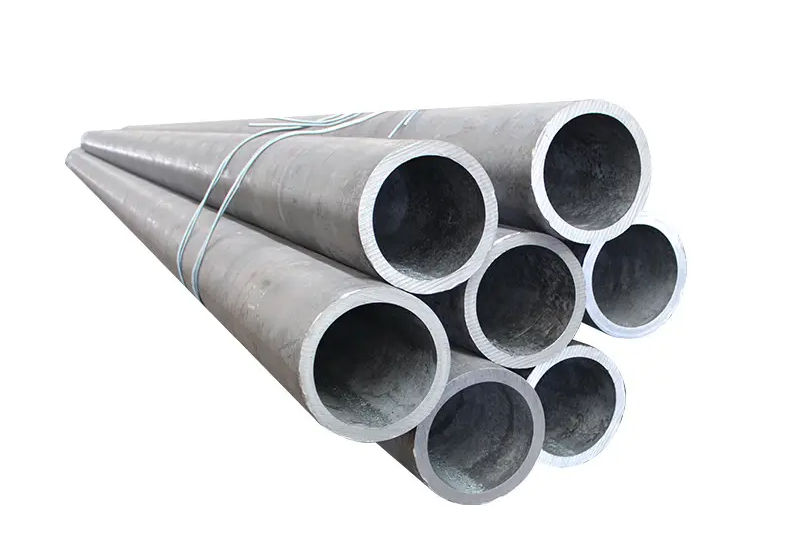
تعتبر الأنابيب الفولاذية المصنوعة من سبائك ASTM A335 ضرورية لتطبيقات درجات الحرارة العالية والضغط العالي في مختلف الصناعات. خواصها الميكانيكية المتفوقة, جنبا إلى جنب مع عمليات التصنيع والاختبار الصارمة, التأكد من أنها تلبي المتطلبات الصعبة لهذه التطبيقات. فهم المواصفات, الدرجات, وتطبيقات أنابيب ASTM A335 تساعد المهندسين والمصممين على اختيار المواد المناسبة لمشاريعهم, ضمان السلامة والكفاءة في البيئات الصعبة.

تشمل مواصفات ASTM A519 عدة درجات من الأنابيب الميكانيكية المصنوعة من الكربون وسبائك الصلب, متوفر إما في الظروف الساخنة أو الباردة. يمكن صب الفولاذ المستخدم في هذه الأنابيب إما في سبائك أو في شكل حبلا. عندما يتم صب درجات مختلفة من الفولاذ بشكل تسلسلي, يجب تحديد المواد الانتقالية.

أنابيب ASTM A213 T11 (أنابيب ASME SA213 T11) يتكون من مادة Chrome Moly Alloy ويستخدم على نطاق واسع في التطبيقات ذات درجات الحرارة العالية, وخاصة في الغلايات وسخانات. نظرا لتطبيقاتها الهامة, عادة ما يكون سعر هذا النوع من الأنابيب أعلى بكثير من أنابيب الكربون القياسية. الدرجات الشائعة في معيار ASTM A213 تشمل الدرجات الشائعة T9, T11, T12, T21, T22, T91, بالإضافة إلى درجات الفولاذ المقاوم للصدأ مثل TP304/L أو TP316/L. النطاق القياسي ASTM A213 وفقًا لمواصفات ASTM, تتعلق هذه المواصفة الخاصة بالأنابيب الفولاذية غير الملحومة من الحديد والأوستنيتي المستخدمة في الغلايات, سخانات فائقة, والمبادلات الحرارية. تشمل الدرجات المحددة التي تغطيها هذه المواصفات T5, TP304, وغيرها مما ورد في الجداول 1 و 2. يتراوح حجم الأنابيب من القطر الداخلي إلى 1/8 بوصة يصل إلى القطر الخارجي 5 بوصة, بسماكات تتراوح من 0.015 ل 0.500 بوصة (0.4 مم ل 12.7 مم). إذا كانت هناك حاجة إلى أحجام أخرى, يمكن تحديدها كجزء من الطلب, جنبا إلى جنب مع سمك الدنيا والمتوسطة.

من خلال فحص التركيب الكيميائي, الخصائص الميكانيكية, عمليات التصنيع, والتطبيقات, يوفر هذا التحليل نظرة شاملة على الأنابيب الفولاذية ASTM A369, وتسليط الضوء على أهميتها في التطبيقات الصناعية عالية الأداء.

من خلال فحص التركيب الكيميائي, الخصائص الميكانيكية, عمليات التصنيع, والتطبيقات, يوفر هذا التحليل نظرة شاملة على الأنابيب الفولاذية ASTM A250, وتسليط الضوء على أهميتها في التطبيقات الصناعية عالية الأداء.