أنابيب الصلب SAW ذات القطر الكبير
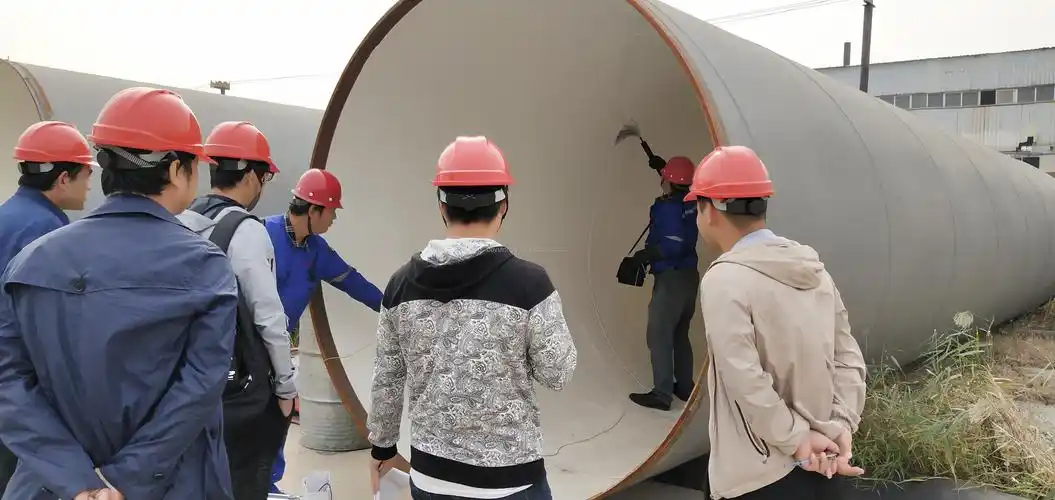
تعتبر الأنابيب الفولاذية SAW ذات القطر الكبير API 5L Grade B منتجًا أساسيًا في قطاعي الطاقة والبنية التحتية العالميين, مظهر تقني للحاجة الماسة لنقل كميات هائلة من السوائل بكفاءة وأمان - غالبًا ما تكون غازًا طبيعيًا منخفض الضغط, النفط الخام, أو عجائن الماء – حيث تكون سعة التدفق عالية, تمليها القطر الكبير, يتم إعطاء الأولوية على قدرات احتواء الضغط الشديد المميزة للأعلى $\text{API 5L}$ الدرجات مثل $\text{X65}$ أو $\text{X80}$. اختيار الدرجة ب ($\text{Gr. B}$) هو خيار اقتصادي وهندسي متعمد, تحديد الحد الأدنى المحدد لقوة الخضوع ($\text{SMYS}$) ل $35,000$ رطل لكل بوصة مربعة, وهو أدنى مستوى قوة موحد داخل $\text{API 5L}$ عائلة, وضع الأنابيب للتطبيقات التي يكون فيها ضغط التصميم معتدلاً ولكن الحجم الكبير وحجم المشروع يتطلبان الحجم الهائل وكفاءة التصنيع التي يوفرها SAW (اللحام بالقوس المغمور) عملية. هذه القوة المنخفضة على ما يبدو تكذب الدقة الفنية لل $\text{API 5L}$ معيار, مما يضمن أن حتى هذه الدرجة الأساسية تخضع لاختبارات أكثر صرامة, التحكم في الأبعاد, وبروتوكولات ضمان الجودة من الأنابيب الهيكلية القياسية, ضمان مستوى الموثوقية الضروري لأي خط أنابيب طويل المدى.
السمة المميزة الحاسمة لهذا المنتج تكمن في عملية تصنيع المنشار ذو القطر الكبير, الذي يفضل بأغلبية ساحقة إما LSAW (ملحومة بالقوس الطولي المغمور) طريقة, يتم تحقيقه عادةً من خلال UOE المعقد (u-ing, O-ing, والتوسع) أو JCOE (J-inten, ج, O-ing, والتوسع) عمليات التشكيل, أو SSAW (دوامة القوس المغمور الملحومة) طريقة, تتمثل الميزة الاقتصادية لكلتا الطريقتين في قدرتهما على إنشاء مقاطع أنابيب بأقطار تتجاوز بشكل متكرر بكفاءة $\text{NPS 24}$ ما يصل الى $\text{NPS 60}$ أو أكبر, غالبًا ما تتضمن سماكة كبيرة للجدار ($\text{WT}$). ال $\text{LSAW}$ عملية, والتي تنطوي على تشكيل ألواح الصلب على البارد (قطع من أوسع $\text{TMCP}$ أو ورقة ملفوفة تقليديا) في شكل أسطواني ولحام واحد, التماس مستقيم داخليا وخارجيا باستخدام الطاقة العالية, ترسيب عالي ** اللحام بالقوس المغمور ($\text{SAW}$) ** تقنية, يؤدي إلى بنية مجهرية موحدة واستقرار ممتاز للأبعاد, ولكنه يتطلب مكابس هيدروليكية ضخمة واستثمارات رأسمالية كبيرة. على العكس من ذلك, ال $\text{SSAW}$ تستخدم العملية لفائف فولاذية أضيق, لفه حلزونيًا لتشكيل الأنبوب ولحام التماس الحلزوني, مما يوفر مرونة أكبر في الأبعاد وتكلفة أقل لمواد الإدخال, من خلال تقديم التعقيد الفريد لدرزة اللحام التي تعمل بزاوية مع محاور الضغط الأساسية, وهو تمييز يجب إدارته بعناية من خلال الاستمرار $\text{NDT}$ (اختبار غير مدمر) لكلتا الطريقتين لضمان السلامة المطلقة لمنطقة اللحام ذات الحجم الكبير.
الأساس المعدني لمادة API 5L Grade B, بينما أبسط من السبائك الدقيقة, عالي-$\text{TMCP}$ الفولاذ المستخدم ل $\text{X}$ الدرجات, لا يزال يخضع لحدود التركيب الكيميائي الصارمة التي يفرضها $\text{API 5L}$, مع التركيز في المقام الأول على ضمان قابلية اللحام الممتازة في المصنع $\text{SAW}$ عملية و, بشكل نقدي, أثناء اللحام الميداني اللاحق حيث يتم ربط أجزاء الأنابيب في ظل الظروف الجوية المتغيرة. الكربون ($\text{C}$) يقتصر المحتوى عادةً على الحد الأقصى $0.26\%$, والكبريت ($\text{S}$) والفوسفور ($\text{P}$) يتم التحكم في المخلفات بإحكام إلى مستويات منخفضة ($\text{S} \le 0.015\%, \text{P} \le 0.030\%$) لتقليل مخاطر العيوب الداخلية مثل الفصل والقابلية للتكسير الناتج عن الهيدروجين ($\text{HIC}$), وضع الفشل المحتمل, خاصة بشكل كبير, ارتفاع المدخلات الحرارية $\text{SAW}$ اللحامات. **الكربون المعادل المحسوب ($\text{CEq}$) ** التابع $\text{Gr. B}$ الصلب هو المقياس الفني الرئيسي, تم الاحتفاظ به منخفضًا عن عمد لضمان بقاء الفولاذ متوافقًا بدرجة كبيرة مع الترسبات العالية, بيئة منخفضة الهيدروجين $\text{SAW}$ عملية, شرط أساسي لتحقيق القوة, يتطلب الدمج عالي التكامل عبر الطول الواسع لدرزة اللحام ذات القطر الكبير.
الشرط الوظيفي النهائي لهذا الأنبوب الكبير هو قدرته على احتواء الضغط, تم قياسها بواسطة متطلبات الشد $\text{API 5L Gr. B}$, والتي تحدد الحد الأدنى $\text{SMYS}$ ل $35,000 \text{ psi}$ والحد الأدنى المحدد لقوة الشد ($\text{SMTS}$) ل $60,000 \text{ psi}$. هذه القيم ليست تعسفية; فهي الأساس لحساب ضغط التشغيل الآمن عبر صيغة بارلو ($\text{P} = 2 \text{t} \times \text{SMYS} \times \text{E} \times \text{F} / \text{OD}$), أين $\text{P}$ هو الضغط, $\text{t}$ هو سمك الجدار, $\text{E}$ هو عامل الكفاءة المشتركة, $\text{F}$ هو عامل التصميم, و $\text{OD}$ هو القطر الخارجي. حتى ل $\text{Gr. B}$, يتطلب هذا الحساب القوة المادية للأنبوب, إلى جانب سمك جدارها, يكفي لاحتواء الضغط الهيدروستاتيكي بحيث يظل إجهاد الطوق الناتج جيدًا ضمن الحد المرن, التأكد من عدم تعرض الأنبوب لتشوه البلاستيك أثناء التشغيل الروتيني أو أثناء الاختبار الهيدروستاتيكي الحرج. الإلزامي $\text{API 5L}$ تضمن بروتوكولات الاختبار التحقق من متطلبات القوة ليس فقط على المعدن الأساسي ولكن أيضًا عبر العرض الكامل لدرزة اللحام SAW, غالبًا من خلال اختبارات الشد العرضي المتخصصة التي تضمن لحام المعدن والمنطقة المتضررة بالحرارة ($\text{HAZ}$) لا تقع تحت $\text{SMTS}$ من المادة الأم, التحقق الرئيسي من جودة التصنيع.
التحدي المتمثل في تصنيع الأنابيب ذات القطر الكبير يقدم قيودًا معقدة تتعلق بالتسامح الأبعاد والهندسة, والتي تعتبر بالغة الأهمية لسلامة خطوط الأنابيب مثل قوة المواد نفسها. الحجم الهائل للأنبوب يجعل التحكم في البيضاوي (الفرق بين الحد الأقصى والحد الأدنى $\text{OD}$) والاستقامة صعبة للغاية, ومع ذلك، تعتبر هذه المعلمات حاسمة لنجاح عملية التجهيز واللحام الميدانية. إن البيضاوية المفرطة تجعل محاذاة نهايات الأنابيب المجاورة للحام محيطي مستحيلة بدون قوة كبيرة, مما يؤدي إلى فجوات لحام غير موحدة وعيوب تمرير الجذر المحتملة. بصورة مماثلة, يعد تربيع نهاية الأنبوب والتكوين الدقيق للزاوية المائلة أمرًا بالغ الأهمية, حيث أن الانحرافات تؤثر بشكل مباشر على جودة وسلامة اللحام الميداني, والتي يجب أن تعمل بشكل موثوق تحت الضغط المستمر لخط الأنابيب. ال $\text{API 5L}$ تضع المواصفات حدودًا صارمة على هذه التفاوتات, والقطر الكبير $\text{SAW}$ يجب قياس الأنابيب وتأهيلها باستخدام أجهزة قياس ومعدات مسح متخصصة للتأكد من أن كل متر يفي بالمعايير, منع التأخير في أعمال البناء وإعادة العمل المكلفة في الميدان, تفويض فني عملي يدعم النجاح اللوجستي الكامل لمشروع خط الأنابيب.
بالإضافة إلى, سلامة $\text{SAW}$ التماس اللحام, بغض النظر عما إذا كان الأمر كذلك $\text{LSAW}$ أو $\text{SSAW}$, تم تأكيده من قبل صارمة **$100\%$ اختبار غير مدمر ($\text{NDT}$) ** بروتوكولات, طبقة السلامة الأساسية لل $\text{API 5L}$ معيار. يتضمن هذا عادةً استخدام **الاختبار التلقائي بالموجات فوق الصوتية ($\text{AUT}$) ** لمسح الحجم الكامل لدرزة اللحام, السعي للكشف عن العيوب الداخلية مثل عدم الانصهار, شوائب الخبث, أو المسامية الداخلية التي يمكن أن تؤثر على قوة انفجار الأنبوب أو تؤدي إلى فشل الكلال. ل $\text{LSAW}$ ماسورة, المستقيم, يتم تبسيط خط اللحام المتوقع $\text{AUT}$, بينما $\text{SSAW}$ يتطلب أكثر تعقيدا, ترتيبات محول الزاوية لحساب المسار الحلزوني. بالإضافة إلى ذلك, $\text{Radiographic Testing ($\text{X-ray}$ or $\text{Gamma Ray}$) ** is often mandated, particularly at the pipe ends, to verify the weld quality in areas prone to start/stop defects, providing volumetric confirmation of soundness. The combination of these $\text{NDT}$ techniques ensures that the large, high-heat $\text{SAW}$ weld is essentially flaw-free before the pipe leaves the mill, a non-negotiable requirement for a product intended to contain high-pressure, often hazardous, fluids over decades of service.
The final structural proof and assurance of the API 5L Gr. B Large Diameter SAW Pipe is the mandatory, non-destructive Hydrostatic Test. Every single length of pipe is filled with water and pressurized to a level significantly exceeding its $\text{MAOP}$. This test is a crucial mechanical filter, proving the pipe’s elastic strength and revealing any existing flaws in the $\text{SAW}$ weld or the body that are close to the critical size, guaranteeing that the pipe can withstand the design pressure with a high margin of safety. While $\text{Gr. B}$ steel has a lower $\text{SMYS}$ compared to $\text{X}$ grades, its wall thickness is often large enough to achieve the required pressure capacity, and the Hydrostatic Test confirms that this design choice is structurally sound, making the test the ultimate seal of quality for the final large diameter product.
The investment in API 5L Grade B Large Diameter SAW Steel Pipe is not merely a procurement decision; it is a strategic commitment to decades of predictable, high-volume fluid conveyance, underwritten by the most stringent certification system in the global pipeline industry. Our product leverages the immense dimensional capacity inherent in the Submerged Arc Welded (SAW) manufacturing process—the proven backbone for large diameter transmission lines—and combines it with the strategically cost-effective Grade B material, creating a solution that is perfectly optimized for projects where flow capacity is king and operational pressure is moderate. This is the intelligent engineering choice, eschewing the unnecessary expense and fabrication complexity of higher-strength $\text{X}$ grades where the design pressure does not warrant them, thereby delivering the maximum return on investment without compromising the non-negotiable standards of safety and structural integrity demanded by the $\text{API 5L}$ specification. The large diameter capability, whether achieved through the linear precision of LSAW or the material efficiency of SSAW, guarantees that your project achieves the desired throughput, minimizing the frictional head loss and the long-term pumping energy consumption, making the initial investment a powerful predictor of operational efficiency and financial sustainability across the entire lifecycle of the pipeline.
The foundational strength of our offering lies in the **Grade B ($\text{SMYS} = 35,000 \text{ psi}$) ** material, a metallurgical masterpiece of cost-efficiency meticulously controlled to meet the demanding parameters of $\text{API 5L}$ despite its position as the entry-level grade. Our commitment to maintaining an ultra-low **Carbon Equivalent ($\text{CEq}$) ** ensures that every length of our large diameter pipe possesses exceptional weldability, a critical factor that dramatically reduces the complexity, time, and defect rate during the high-stakes field girth welding process, minimizing installation risk and accelerating project schedules. This guaranteed, repeatable weld quality is further reinforced by the inherent reliability of the $\text{SAW}$ process itself, which utilizes a massive, protected arc to deposit high-quality, high-volume weld metal, forming a seam that is consistently stronger and more ductile than the parent material, a technical assurance that is subsequently validated by the unyielding rigor of **$100\%$ Non-Destructive Testing ($\text{NDT}$) **. Every millimeter of the extensive $\text{SAW}$ seam is scanned by Automatic Ultrasonic Testing ($\text{AUT}$), eliminating volumetric defects and guaranteeing a flaw-free pressure boundary that meets or exceeds the uncompromising standards of the American Petroleum Institute, giving our clients absolute, verifiable confidence in the integrity of the pipe they bury.
Furthermore, the operational security of our large diameter $\text{Gr. B}$ pipe is ultimately confirmed by the non-negotiable Hydrostatic Test, a process that transcends simple quality control to become the pipeline’s final, structural Proof of Concept. Each pipe section is individually subjected to internal pressures significantly exceeding the final operating pressure, effectively placing every element—the $\text{Gr. B}$ body steel, the $\text{SAW}$ seam, and the end geometry—under maximum design stress. This rigorous testing filters out any potential flaws or weaknesses, ensuring that the material has achieved its full **Specified Minimum Yield Strength ($\text{SMYS}$) ** guarantee, and providing the ultimate assurance that the pipe will perform reliably under the sustained loads of service for its entire design life. . This commitment to pressure-testing every single length translates directly into risk mitigation for our clients, providing an auditable, quantifiable safety standard that is the hallmark of $\text{API 5L}$ excellence. The impeccable dimensional control of our large diameter product, covering ultra-tight tolerances on ovality, end squareness, and $\text{OD}$, ensures that this structural integrity translates seamlessly into smooth, rapid, and defect-free field installation, providing the necessary precision that high-volume construction projects demand, positioning our API 5L Grade B Large Diameter SAW Steel Pipe as the technically superior and economically advantageous choice for tomorrow’s essential infrastructure.
Structured Technical Specification Data: API 5L Grade B Large Diameter SAW Steel Pipe
| Category | Technical Specification | Typical Requirements & Standards | Technical Significance |
| Material Grade | API 5L Grade B (Gr. B) | $\text{API Specification 5L}$. Common for lower pressure service. | $\text{SMYS}$ (Specified Minimum Yield Strength) Min. $35,000 \text{ psi}$ (240 $\text{MPa}$). Provides base-level pressure containment capacity. |
| Manufacturing Method | SAW (Submerged Arc Welded) | $\text{LSAW}$ (Longitudinal) or $\text{SSAW}$ (Spiral) processes used. | Essential for economically producing Large Diameter Pipe ($\text{NPS 24+}$) with high $\text{WT}$ and high-quality weld seams. |
| Dimensions | Large Diameter, Various WT | $\text{OD}$ typically $\ge \text{NPS 24}$. **Wall Thickness ($\text{WT}$) ** varies based on design pressure requirements. | Large size maximizes flow capacity for high-volume transmission lines. $\text{WT}$ is chosen to meet $\text{MAOP}$ based on $\text{Gr. B}$ strength. |
| Governing Standard | API Specification 5L | Defines material grades, $\text{NDT}$, testing (Hydrostatic, Flattening, Tensile), and dimensional tolerances. | The international standard for line pipe, ensuring safety and integrity in fluid transmission. |
| Chemical Composition | Controlled $\text{CEq}$ | $\text{C}$ Max $0.26\%$. $\text{Mn}$ Max $1.20\%$. $\text{P}$ Max $0.030\%$. $\text{S}$ Max $0.030\%$. | Low $\text{CEq}$ ensures good weldability during the high-heat $\text{SAW}$ process and facilitates easy field welding. |
| Heat Treatment Req. | As-Welded or Normalized | Typically supplied in the $\text{As-Welded}$ condition. Normalizing or stress relief may be required for specific service conditions. | Minimizes residual stresses and ensures the $\text{SAW}$ weld $\text{HAZ}$ microstructure is sound and free from hard zones. |
| Tensile Requirements | SMYS & SMTS | $\text{SMYS}$ Min $35,000 \text{ psi}$. $\text{SMTS}$ Min $60,000 \text{ psi}$. Elongation Min. $23\%$. | Guarantees the necessary strength and ductility for pressure containment and resistance to mechanical failure. |
| Application | Line Pipe (Moderate Pressure) | Transport of water, natural gas, crude oil, and slurry where large flow capacity is required. | Optimized for long-distance, high-volume transmission under moderate pressure and external loads. |
| Features | High Flow Capacity, Weld Integrity | $\text{Features:}$ Excellent $\text{SAW}$ weld quality, high dimensional control, proven $\text{NDT}$ certification. | The large diameter provides immense capacity; $\text{SAW}$ welding ensures the $\text{API 5L}$ integrity for the entire pipe length. |
| Tolerance of $\text{OD}$ and $\text{WT}$ | API 5L Dimensional Tolerances | Ovality and Straightness are tightly controlled. $\text{WT}$ tolerance is typically $\pm 10\%$. $\text{OD}$ tolerance is tight ($\pm 0.5\%$). | Tight control of $\text{OD}$ and ovality is critical for efficient and defect-free field welding fit-up of large pipe sections. |
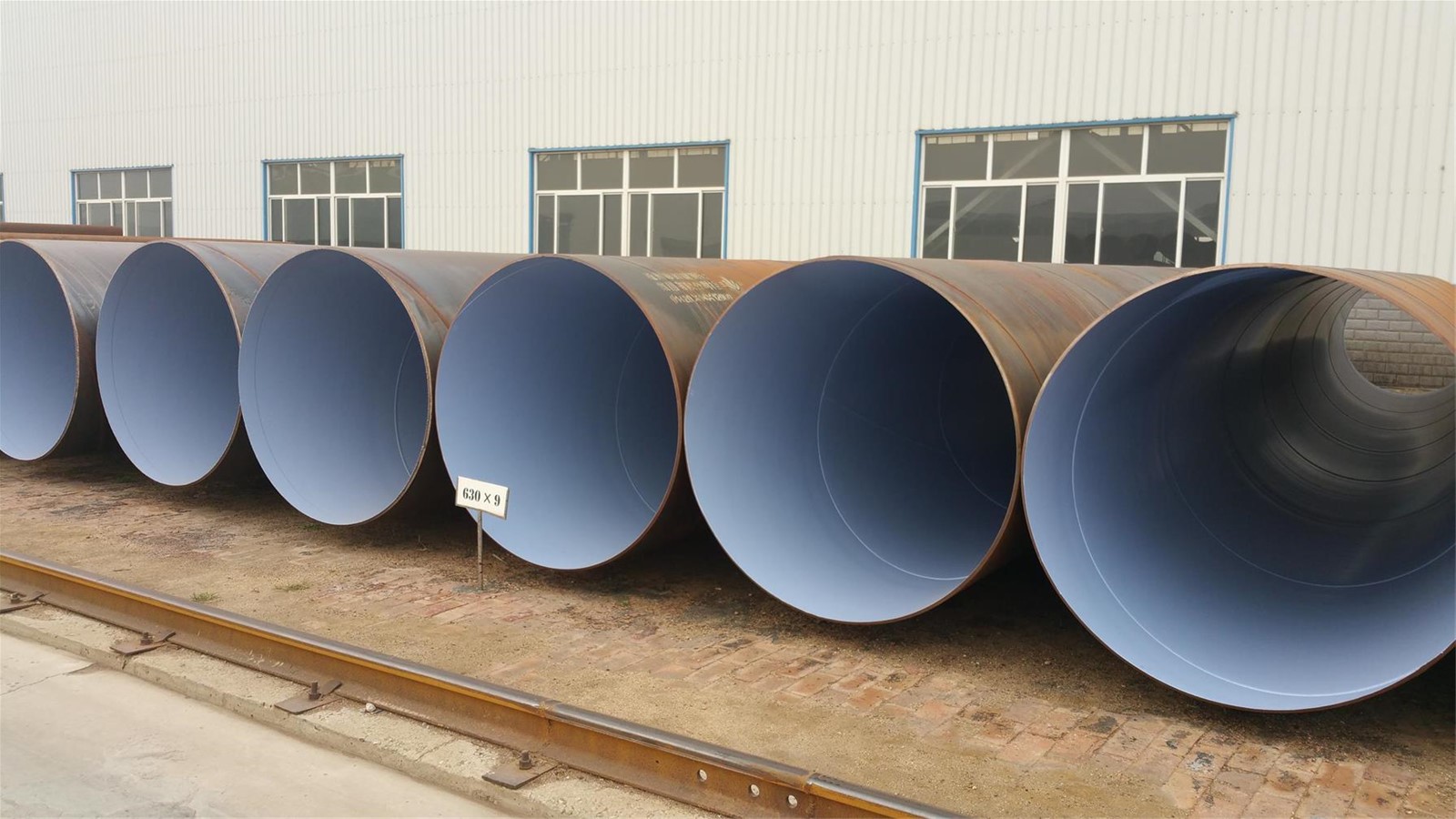
SSAW أنابيب الصلب, المعروف أيضًا باسم الأنابيب الفولاذية الملحومة بالقوس المغمور الحلزوني, عبارة عن أنبوب فولاذي ملحوم حلزوني يتم إنتاجه عن طريق اللحام القوسي المغمور على الوجهين. يتم تشكيل الأنابيب الملحومة الحلزونية باستخدام صفائح أضيق أو ملفات مدرفلة على الساخن, مما يقلل بشكل كبير من تكاليف إنتاجها. تسمح عملية اللحام الحلزوني بإنتاج أنابيب ذات قطر كبير مناسبة لنقل كميات كبيرة من النفط والغاز.
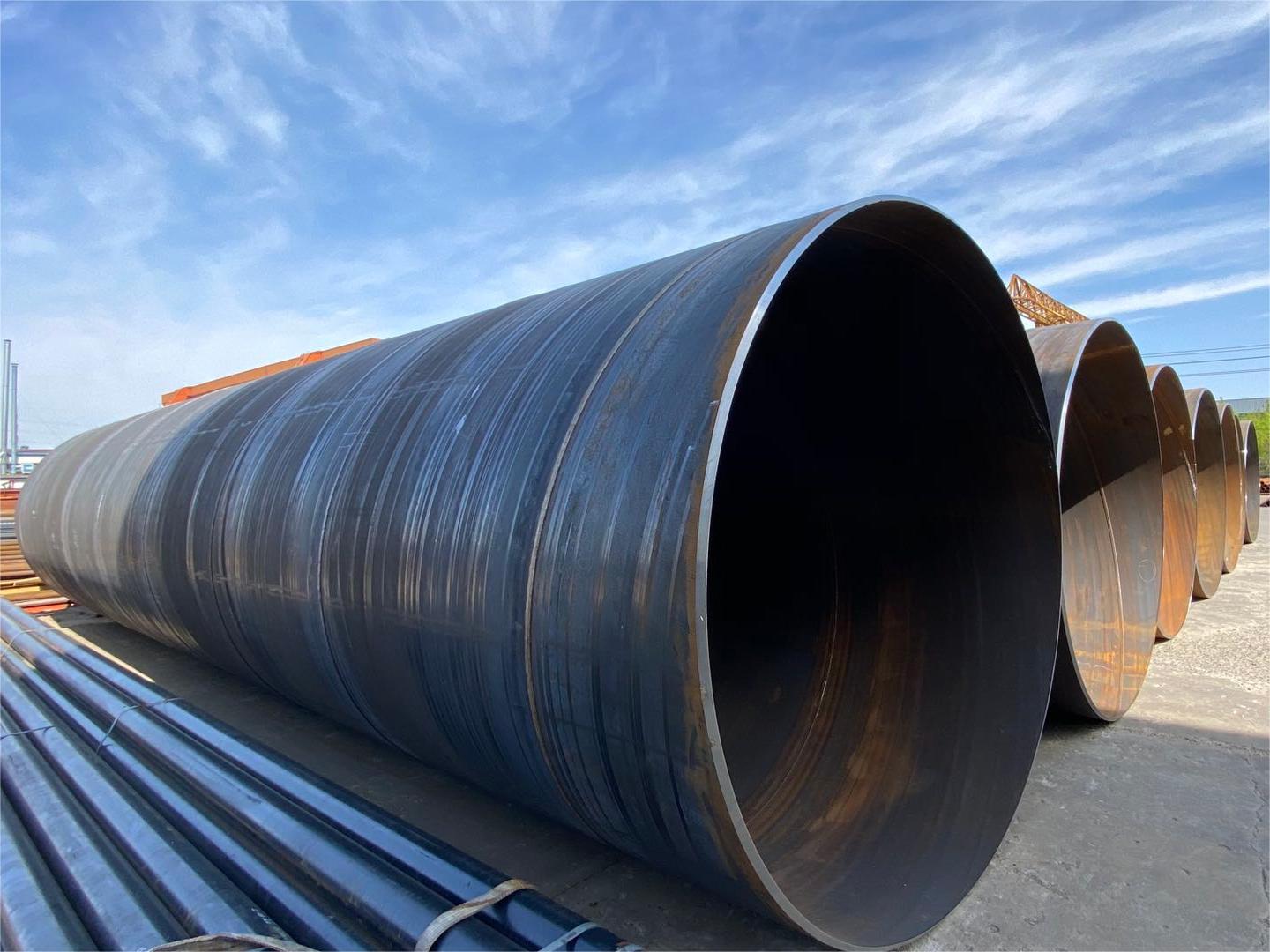
توفر الأنابيب الفولاذية SSAW حلاً عمليًا لمجموعة من التطبيقات التي تتطلب المتانة, القطر الكبير, والأنابيب الطويلة. في حين أن لديهم بعض القيود من حيث الدقة واحتمال حدوث عيوب, فعاليتها من حيث التكلفة وقوتها تجعلها خيارًا شائعًا في مختلف الصناعات. لتطبيقات محددة, ومن الضروري اختيار الدرجة المناسبة والامتثال للمعايير ذات الصلة لضمان السلامة والكفاءة.
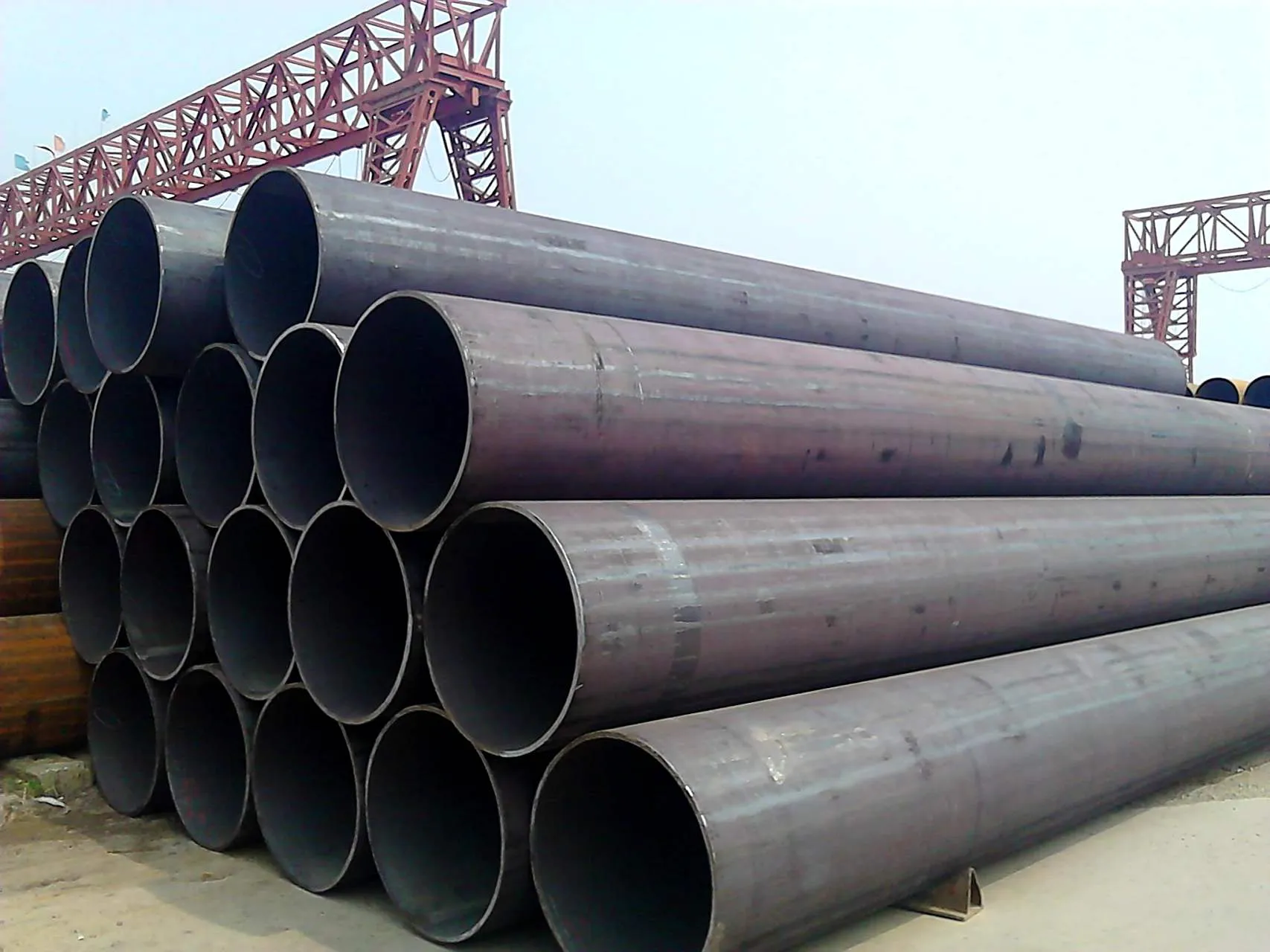
نطاق درجات الصلب تحت ** en 10219-1** المعيار-من ** s235jrh ** من خلال ** s355joh/jeh ** إلى الأداء العالي ** S460MH **-يوفر الحل الأساسي لكل تحدي الأساس العميق. يضمن هذا المعيار الأوروبي ليس فقط الخصائص الميكانيكية ** ** ** (تصل إلى القوة 460 MPa) ولكن أيضا الحرجة ** التأثير المتانة ** ($\نص{J0}/\نص{J2}$) و Superior ** قابلية اللحام ** من خلال التحكم الصارم في ** معادلة الكربون ** **.
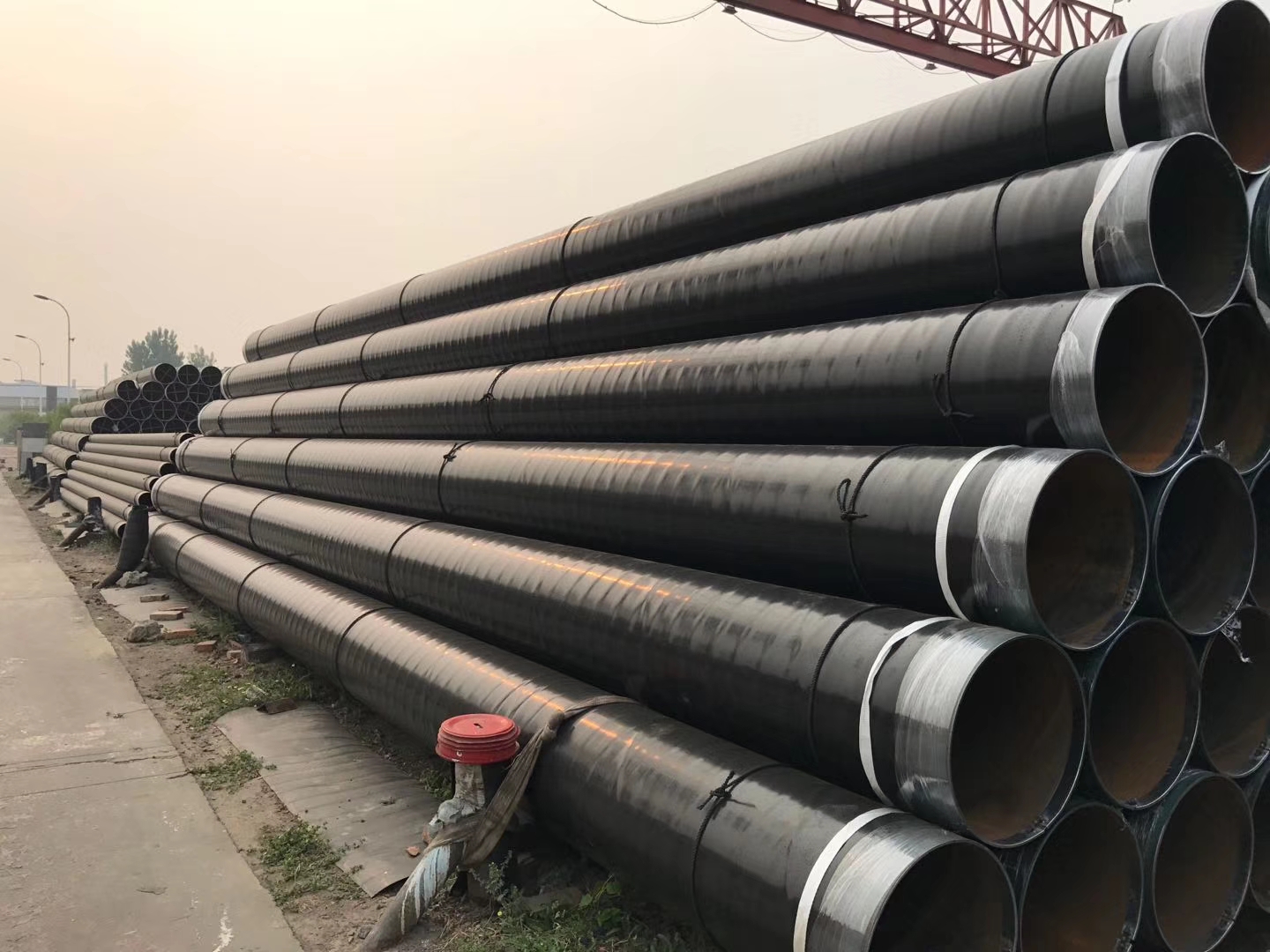
إن أنبوب SSAW من الصلب الكربوني API 5L عبارة عن قطعة متخصصة للغاية من البنية التحتية الهندسية, حل مادي لا يتم تحديده بشكل أساسي من خلال قيود الأبعاد البسيطة أو الحماية من التآكل على مستوى المنفعة, ولكن من خلال السعي الدؤوب للقوة العالية, سلامة اللحام الموثوقة, وصلابة الكسر الاستثنائية, كل ما هو ضروري لضمان السلامة, دون انقطاع, ونقل الضغط العالي للهيدروكربونات, الغاز الطبيعي, أو عجائن السوائل الكثيفة عبر المناظر الطبيعية الجيولوجية والبيئية الشاسعة. على عكس المألوف