Tubo de aço SAW de grande diâmetro
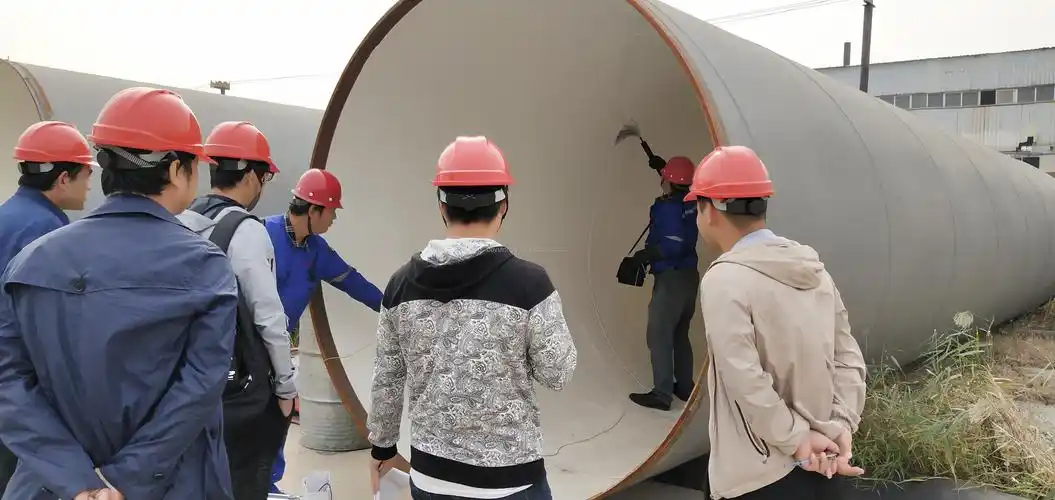
O tubo de aço SAW de grande diâmetro API 5L Grau B se destaca como um produto fundamental nos setores globais de energia e infraestrutura, uma manifestação técnica da necessidade crítica de transportar volumes massivos de fluidos de forma eficiente e segura – muitas vezes gás natural de baixa pressão, petróleo bruto, ou lamas de água - onde a alta capacidade de fluxo, ditado pelo grande diâmetro, é priorizado sobre as capacidades de contenção de pressão extrema características de $\text{API 5L}$ notas como $\text{X65}$ ou $\text{X80}$. A seleção do Grau B ($\text{Gr. B}$) é uma escolha econômica e de engenharia deliberada, especificando um limite mínimo de rendimento mínimo especificado ($\text{SMYS}$) de $35,000$ psi, que é o nível de força padronizado mais baixo dentro do $\text{API 5L}$ família, posicionar o tubo para aplicações onde a pressão do projeto é moderada, mas o grande volume e escala do projeto exigem o imenso tamanho e a eficiência de fabricação proporcionada pelo SAW (Soldagem por arco submerso) processo. Esta resistência aparentemente baixa desmente o rigor técnico do $\text{API 5L}$ padrão, o que garante que mesmo esta nota de nível básico seja submetida a testes muito mais rigorosos, controle dimensional, e protocolos de garantia de qualidade do que tubos estruturais padrão, garantindo um nível de confiabilidade essencial para qualquer gasoduto de longo curso.
A característica definidora crucial deste produto está no processo de fabricação da serra de grande diâmetro, que favorece esmagadoramente a LSAW (Arco Submerso Longitudinal Soldado) método, normalmente alcançado através do complexo UOE (U-ing, O-ing, e expansão) ou JCOE (J-Inten, C-ing, O-ing, e expansão) processos de formação, ou o SSAW (Arco Submerso Espiral Soldado) método, a vantagem económica de ambos os métodos é a sua capacidade de criar eficientemente secções de tubos com diâmetros frequentemente superiores $\text{NPS 24}$ até $\text{NPS 60}$ ou maior, muitas vezes envolvendo espessuras de parede substanciais ($\text{WT}$). O $\text{LSAW}$ processo, que envolve chapa de aço conformada a frio (cortar de mais largo $\text{TMCP}$ ou folha laminada convencionalmente) em uma forma cilíndrica e soldando o único, costura reta interna e externamente usando o sistema de alta energia, alta deposição ** Soldagem por arco submerso ($\text{SAW}$) ** técnica, resulta em uma microestrutura uniforme e excelente estabilidade dimensional, mas requer prensas hidráulicas maciças e investimento de capital substancial. Por outro lado, o $\text{SSAW}$ processo utiliza bobina de aço mais estreita, enrolando-o em espiral para formar o tubo e soldando a costura helicoidal, oferecendo maior flexibilidade dimensional e menor custo de material de entrada, embora introduza a complexidade única de um cordão de solda que forma um ângulo em relação aos eixos de tensão primários, uma distinção que deve ser cuidadosamente gerenciada através de contínua $\text{NDT}$ (Testes Não Destrutivos) para ambos os métodos para garantir a integridade absoluta da zona de solda de grande volume.
A base metalúrgica do material API 5L Grau B, embora mais simples que o micro-ligado, alto-$\text{TMCP}$ aços usados para $\text{X}$ notas, ainda é regido por limites rígidos de composição química exigidos por $\text{API 5L}$, focando principalmente em garantir excelente soldabilidade no laminador $\text{SAW}$ processo e, criticamente, durante a soldagem de campo subsequente, onde segmentos de tubos são unidos sob condições climáticas variáveis. O carbono ($\text{C}$) o conteúdo é normalmente limitado a um máximo de $0.26\%$, e o enxofre ($\text{S}$) e fósforo ($\text{P}$) os resíduos são rigorosamente controlados a níveis baixos ($\text{S} \le 0.015\%, \text{P} \le 0.030\%$) para minimizar o risco de defeitos internos como segregação e a suscetibilidade à fissuração induzida por hidrogênio ($\text{HIC}$), um modo de falha potencial, particularmente em grandes, alta entrada de calor $\text{SAW}$ soldas. O **equivalente de carbono calculado ($\text{CEq}$) ** do $\text{Gr. B}$ o aço é uma métrica técnica chave, intencionalmente mantido baixo para garantir que o aço permaneça altamente compatível com a alta deposição, ambiente com baixo teor de hidrogênio do $\text{SAW}$ processo, um pré-requisito para alcançar a solidez, fusão de alta integridade necessária em todo o extenso comprimento do cordão de solda de grande diâmetro.
O requisito funcional final deste grande tubo é a sua capacidade de conter pressão, quantificado pelos Requisitos de Tração de $\text{API 5L Gr. B}$, que especificam um mínimo $\text{SMYS}$ de $35,000 \text{ psi}$ e uma resistência à tração mínima especificada ($\text{SMTS}$) de $60,000 \text{ psi}$. Esses valores não são arbitrários; eles são a base para calcular a pressão operacional segura através da fórmula de Barlow ($\text{P} = 2 \text{t} \times \text{SMYS} \times \text{E} \times \text{F} / \text{OD}$), onde $\text{P}$ é pressão, $\text{t}$ é a espessura da parede, $\text{E}$ é o fator de eficiência conjunto, $\text{F}$ é o fator de design, e $\text{OD}$ é o diâmetro externo. Mesmo para $\text{Gr. B}$, este cálculo exige que a resistência do material do tubo, juntamente com sua espessura de parede, é suficiente para conter a pressão hidrostática de modo que a tensão circular resultante permaneça bem dentro do limite elástico, garantindo que o tubo não sofra deformação plástica durante a operação de rotina ou durante o teste hidrostático crítico. O obrigatório $\text{API 5L}$ protocolos de teste garantem que os requisitos de resistência sejam verificados não apenas no metal base, mas também em toda a largura da costura de solda SAW, muitas vezes através de testes de tração transversais especializados que garantem o metal de solda e a zona afetada pelo calor ($\text{HAZ}$) não fique abaixo do $\text{SMTS}$ do material pai, uma verificação chave da qualidade de fabricação.
O desafio de fabricar tubos de grande diâmetro introduz restrições complexas relacionadas à tolerância dimensional e à geometria, que são tão críticos para a integridade da tubulação quanto a própria resistência do material. A escala do tubo torna o controle da ovalidade (a diferença entre máximo e mínimo $\text{OD}$) e retidão extremamente difícil, ainda assim, esses parâmetros são críticos para o sucesso do ajuste em campo e da soldagem. A ovalização excessiva torna impossível o alinhamento das extremidades adjacentes do tubo para soldagem circunferencial sem muita força, levando a lacunas de solda não uniformes e potenciais defeitos no passe de raiz. De forma similar, a esquadria da extremidade do tubo e a configuração precisa do ângulo de chanfro são cruciais, já que os desvios afetam diretamente a qualidade e integridade da solda de campo, que deve funcionar de forma confiável sob o estresse constante da tubulação. O $\text{API 5L}$ a especificação estabelece limites estritos para essas tolerâncias, e o grande diâmetro $\text{SAW}$ o tubo deve ser medido e qualificado usando medidores e equipamentos de varredura especializados para garantir que cada medidor atenda ao padrão, evitando atrasos na construção a jusante e retrabalhos dispendiosos no campo, um mandato técnico prático que sustenta todo o sucesso logístico do projeto do gasoduto.
Além disso, a integridade do $\text{SAW}$ costura de solda, independentemente de ser $\text{LSAW}$ ou $\text{SSAW}$, é confirmado por rigoroso **$100\%$ Testes Não Destrutivos ($\text{NDT}$) ** protocolos, uma camada de segurança fundamental do $\text{API 5L}$ padrão. Isso normalmente envolve o uso de **Teste Ultrassônico Automático ($\text{AUT}$) ** para digitalizar todo o volume da costura de solda, buscando detectar defeitos internos como falta de fusão, inclusões de escória, ou porosidade interna que pode comprometer a resistência ao rompimento do tubo ou levar à falha por fadiga. Para $\text{LSAW}$ cano, o direto, linha de solda previsível simplifica $\text{AUT}$, enquanto $\text{SSAW}$ requer mais complexo, arranjos de transdutores angulares para levar em conta o caminho espiral. Adicionalmente, $\text{Radiographic Testing ($\text{X-ray}$ or $\text{Gamma Ray}$) ** is often mandated, particularly at the pipe ends, to verify the weld quality in areas prone to start/stop defects, providing volumetric confirmation of soundness. The combination of these $\text{NDT}$ techniques ensures that the large, high-heat $\text{SAW}$ weld is essentially flaw-free before the pipe leaves the mill, a non-negotiable requirement for a product intended to contain high-pressure, often hazardous, fluids over decades of service.
The final structural proof and assurance of the API 5L Gr. B Large Diameter SAW Pipe is the mandatory, non-destructive Hydrostatic Test. Every single length of pipe is filled with water and pressurized to a level significantly exceeding its $\text{MAOP}$. This test is a crucial mechanical filter, proving the pipe’s elastic strength and revealing any existing flaws in the $\text{SAW}$ weld or the body that are close to the critical size, guaranteeing that the pipe can withstand the design pressure with a high margin of safety. While $\text{Gr. B}$ steel has a lower $\text{SMYS}$ compared to $\text{X}$ grades, its wall thickness is often large enough to achieve the required pressure capacity, and the Hydrostatic Test confirms that this design choice is structurally sound, making the test the ultimate seal of quality for the final large diameter product.
The investment in API 5L Grade B Large Diameter SAW Steel Pipe is not merely a procurement decision; it is a strategic commitment to decades of predictable, high-volume fluid conveyance, underwritten by the most stringent certification system in the global pipeline industry. Our product leverages the immense dimensional capacity inherent in the Submerged Arc Welded (SAW) manufacturing process—the proven backbone for large diameter transmission lines—and combines it with the strategically cost-effective Grade B material, creating a solution that is perfectly optimized for projects where flow capacity is king and operational pressure is moderate. This is the intelligent engineering choice, eschewing the unnecessary expense and fabrication complexity of higher-strength $\text{X}$ grades where the design pressure does not warrant them, thereby delivering the maximum return on investment without compromising the non-negotiable standards of safety and structural integrity demanded by the $\text{API 5L}$ specification. The large diameter capability, whether achieved through the linear precision of LSAW or the material efficiency of SSAW, guarantees that your project achieves the desired throughput, minimizing the frictional head loss and the long-term pumping energy consumption, making the initial investment a powerful predictor of operational efficiency and financial sustainability across the entire lifecycle of the pipeline.
The foundational strength of our offering lies in the **Grade B ($\text{SMYS} = 35,000 \text{ psi}$) ** material, a metallurgical masterpiece of cost-efficiency meticulously controlled to meet the demanding parameters of $\text{API 5L}$ despite its position as the entry-level grade. Our commitment to maintaining an ultra-low **Carbon Equivalent ($\text{CEq}$) ** ensures that every length of our large diameter pipe possesses exceptional weldability, a critical factor that dramatically reduces the complexity, time, and defect rate during the high-stakes field girth welding process, minimizing installation risk and accelerating project schedules. This guaranteed, repeatable weld quality is further reinforced by the inherent reliability of the $\text{SAW}$ process itself, which utilizes a massive, protected arc to deposit high-quality, high-volume weld metal, forming a seam that is consistently stronger and more ductile than the parent material, a technical assurance that is subsequently validated by the unyielding rigor of **$100\%$ Non-Destructive Testing ($\text{NDT}$) **. Every millimeter of the extensive $\text{SAW}$ seam is scanned by Automatic Ultrasonic Testing ($\text{AUT}$), eliminating volumetric defects and guaranteeing a flaw-free pressure boundary that meets or exceeds the uncompromising standards of the American Petroleum Institute, giving our clients absolute, verifiable confidence in the integrity of the pipe they bury.
Furthermore, the operational security of our large diameter $\text{Gr. B}$ pipe is ultimately confirmed by the non-negotiable Hydrostatic Test, a process that transcends simple quality control to become the pipeline’s final, structural Proof of Concept. Each pipe section is individually subjected to internal pressures significantly exceeding the final operating pressure, effectively placing every element—the $\text{Gr. B}$ body steel, the $\text{SAW}$ seam, and the end geometry—under maximum design stress. This rigorous testing filters out any potential flaws or weaknesses, ensuring that the material has achieved its full **Specified Minimum Yield Strength ($\text{SMYS}$) ** guarantee, and providing the ultimate assurance that the pipe will perform reliably under the sustained loads of service for its entire design life. . This commitment to pressure-testing every single length translates directly into risk mitigation for our clients, providing an auditable, quantifiable safety standard that is the hallmark of $\text{API 5L}$ excellence. The impeccable dimensional control of our large diameter product, covering ultra-tight tolerances on ovality, end squareness, and $\text{OD}$, ensures that this structural integrity translates seamlessly into smooth, rapid, and defect-free field installation, providing the necessary precision that high-volume construction projects demand, positioning our API 5L Grade B Large Diameter SAW Steel Pipe as the technically superior and economically advantageous choice for tomorrow’s essential infrastructure.
Structured Technical Specification Data: API 5L Grade B Large Diameter SAW Steel Pipe
| Category | Technical Specification | Typical Requirements & Standards | Technical Significance |
| Material Grade | API 5L Grade B (Gr. B) | $\text{API Specification 5L}$. Common for lower pressure service. | $\text{SMYS}$ (Specified Minimum Yield Strength) Min. $35,000 \text{ psi}$ (240 $\text{MPa}$). Provides base-level pressure containment capacity. |
| Manufacturing Method | SAW (Submerged Arc Welded) | $\text{LSAW}$ (Longitudinal) or $\text{SSAW}$ (Spiral) processes used. | Essential for economically producing Large Diameter Pipe ($\text{NPS 24+}$) with high $\text{WT}$ and high-quality weld seams. |
| Dimensions | Large Diameter, Various WT | $\text{OD}$ typically $\ge \text{NPS 24}$. **Wall Thickness ($\text{WT}$) ** varies based on design pressure requirements. | Large size maximizes flow capacity for high-volume transmission lines. $\text{WT}$ is chosen to meet $\text{MAOP}$ based on $\text{Gr. B}$ strength. |
| Governing Standard | API Specification 5L | Defines material grades, $\text{NDT}$, testing (Hydrostatic, Flattening, Tensile), and dimensional tolerances. | The international standard for line pipe, ensuring safety and integrity in fluid transmission. |
| Chemical Composition | Controlled $\text{CEq}$ | $\text{C}$ Max $0.26\%$. $\text{Mn}$ Max $1.20\%$. $\text{P}$ Max $0.030\%$. $\text{S}$ Max $0.030\%$. | Low $\text{CEq}$ ensures good weldability during the high-heat $\text{SAW}$ process and facilitates easy field welding. |
| Heat Treatment Req. | As-Welded or Normalized | Typically supplied in the $\text{As-Welded}$ condition. Normalizing or stress relief may be required for specific service conditions. | Minimizes residual stresses and ensures the $\text{SAW}$ weld $\text{HAZ}$ microstructure is sound and free from hard zones. |
| Tensile Requirements | SMYS & SMTS | $\text{SMYS}$ Min $35,000 \text{ psi}$. $\text{SMTS}$ Min $60,000 \text{ psi}$. Elongation Min. $23\%$. | Guarantees the necessary strength and ductility for pressure containment and resistance to mechanical failure. |
| Application | Line Pipe (Moderate Pressure) | Transport of water, natural gas, crude oil, and slurry where large flow capacity is required. | Optimized for long-distance, high-volume transmission under moderate pressure and external loads. |
| Features | High Flow Capacity, Weld Integrity | $\text{Features:}$ Excellent $\text{SAW}$ weld quality, high dimensional control, proven $\text{NDT}$ certification. | The large diameter provides immense capacity; $\text{SAW}$ welding ensures the $\text{API 5L}$ integrity for the entire pipe length. |
| Tolerance of $\text{OD}$ and $\text{WT}$ | API 5L Dimensional Tolerances | Ovality and Straightness are tightly controlled. $\text{WT}$ tolerance is typically $\pm 10\%$. $\text{OD}$ tolerance is tight ($\pm 0.5\%$). | Tight control of $\text{OD}$ and ovality is critical for efficient and defect-free field welding fit-up of large pipe sections. |
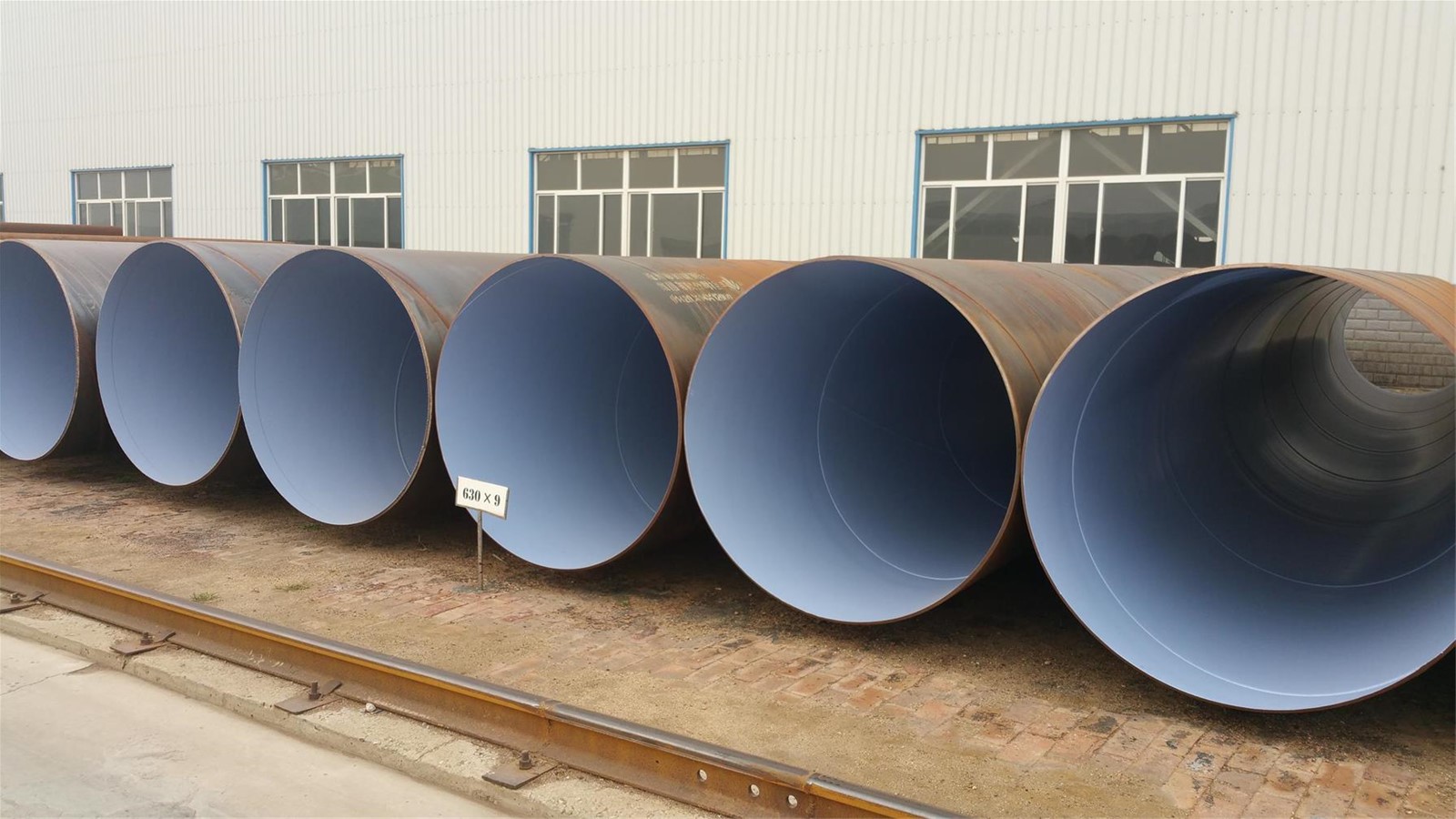
Tubo de aço SSAW, também conhecido como tubo de aço soldado por arco submerso em espiral, é um tubo de aço soldado em espiral produzido por soldagem por arco submerso de dupla face. Tubos soldados em espiral são formados usando folhas mais estreitas ou bobinas laminadas a quente, o que reduz muito seus custos de produção. O processo de soldagem em espiral permite a produção de tubos de grande diâmetro adequados para o transporte de grandes quantidades de petróleo e gás.
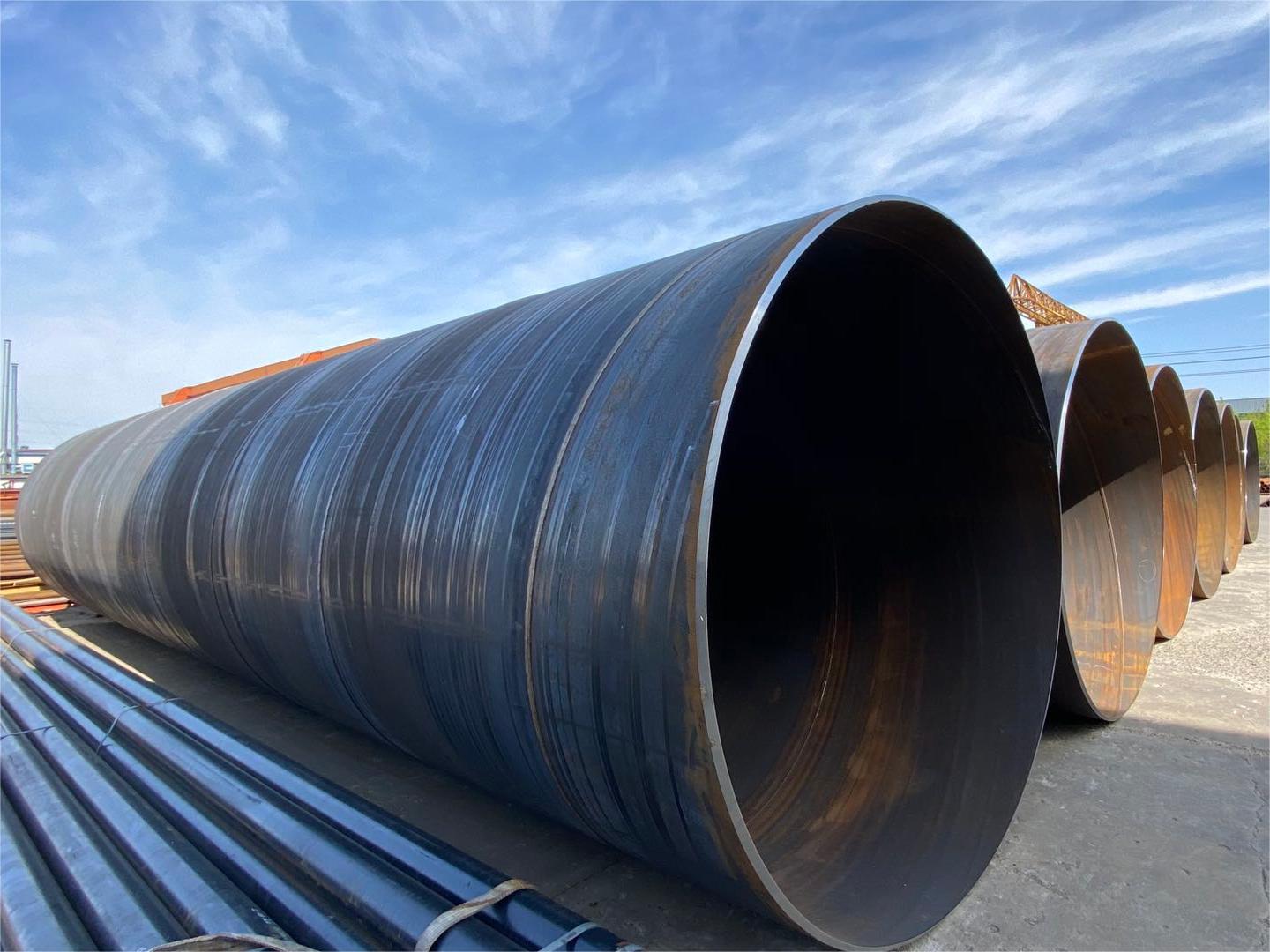
Os tubos de aço SSAW oferecem uma solução prática para uma variedade de aplicações que exigem durabilidade, grande diâmetro, e tubos longos. Embora tenham certas limitações em termos de precisão e potencial para defeitos, sua relação custo-benefício e força os tornam uma escolha popular em vários setores. Para aplicações específicas, é crucial selecionar o grau apropriado e cumprir os padrões relevantes para garantir segurança e eficiência.
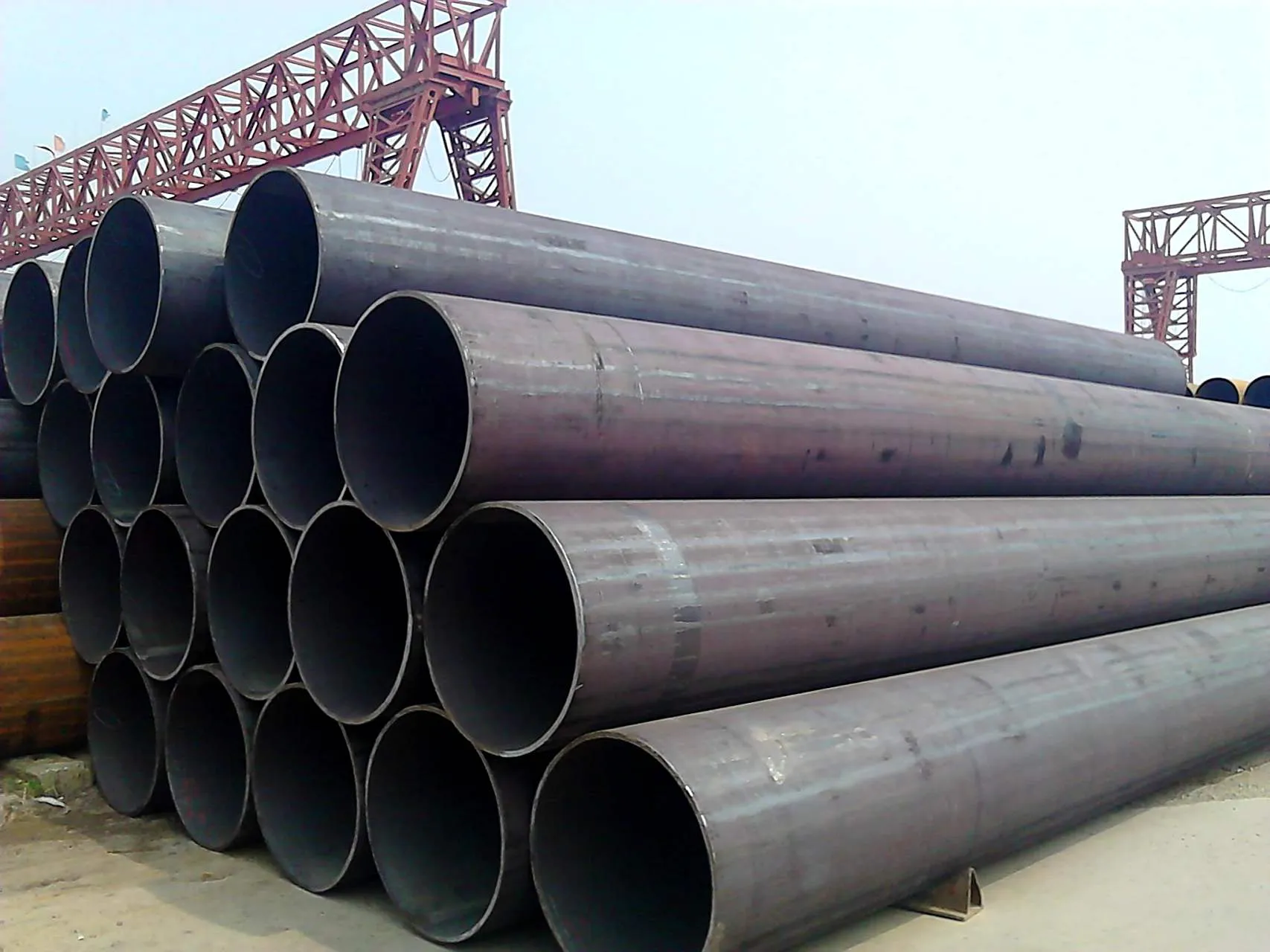
A gama de graus de aço sob o ** EN 10219-1** Padrão-de confiável ** S235JRH ** através do versátil ** S355JOH/JEH ** para o alto desempenho ** S460MH **-fornece a solução de material essencial para cada desafio de fundação profunda. Este padrão europeu garante não apenas altos ** propriedades mecânicas ** (Força de escoamento até 460 MPa) mas também crítico ** impacto resistência ** ($\texto{J0}/\texto{J2}$) e superior ** soldabilidade ** através do controle rigoroso do ** equivalente a carbono **.
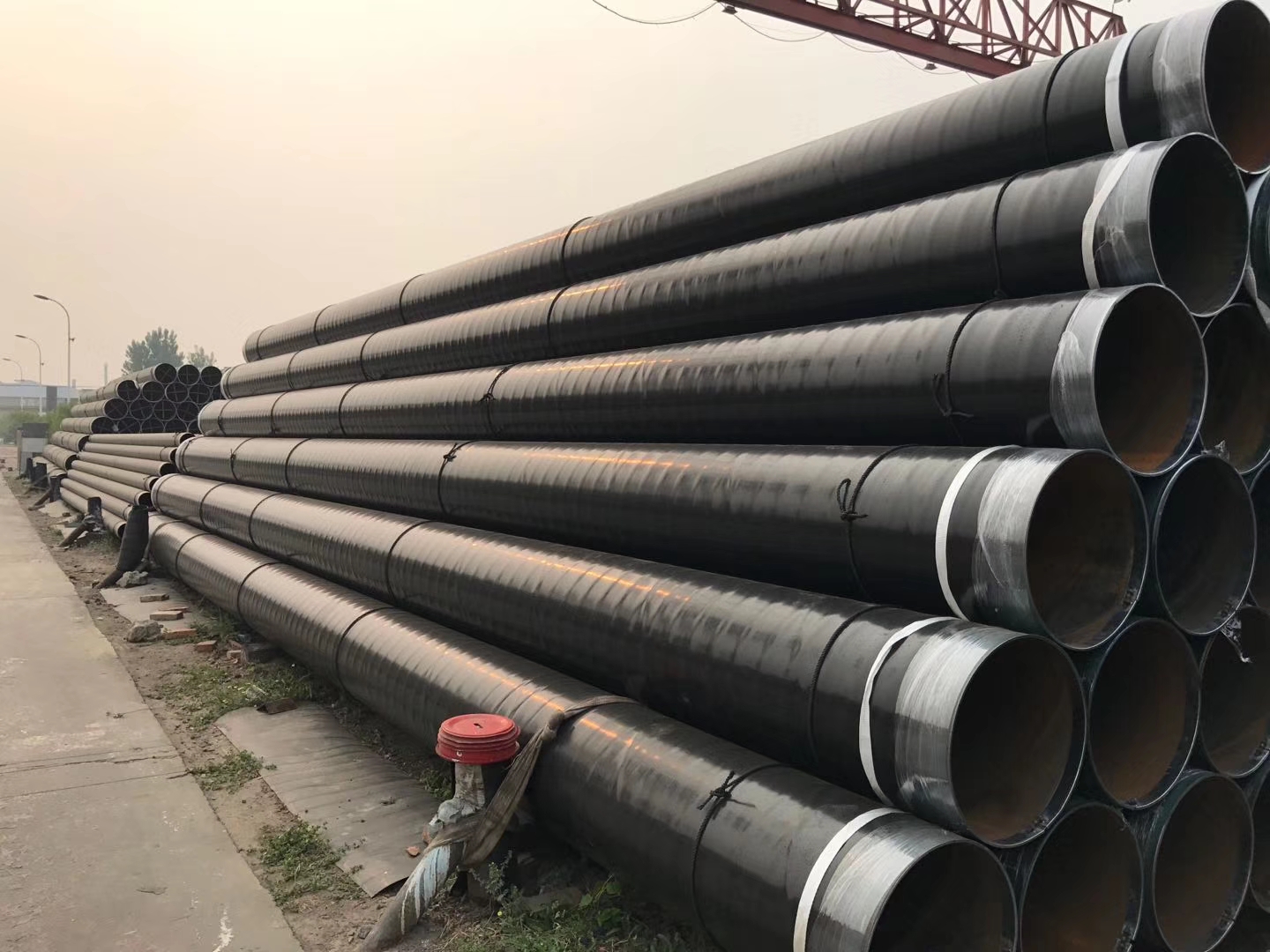
O tubo SSAW de aço carbono API 5L é uma peça altamente especializada de infraestrutura de engenharia, uma solução de material fundamentalmente definida não por simples restrições dimensionais ou proteção contra corrosão de nível utilitário, mas pela busca incessante de alta resistência, integridade confiável da solda, e excepcional tenacidade à fratura, tudo o que for necessário para garantir a segurança, ininterrupto, e transporte de hidrocarbonetos em alta pressão, gás natural, ou lamas fluidas densas em vastas paisagens geológicas e ambientais. Ao contrário do familiar