ท่อเหล็ก SAW เส้นผ่านศูนย์กลางขนาดใหญ่
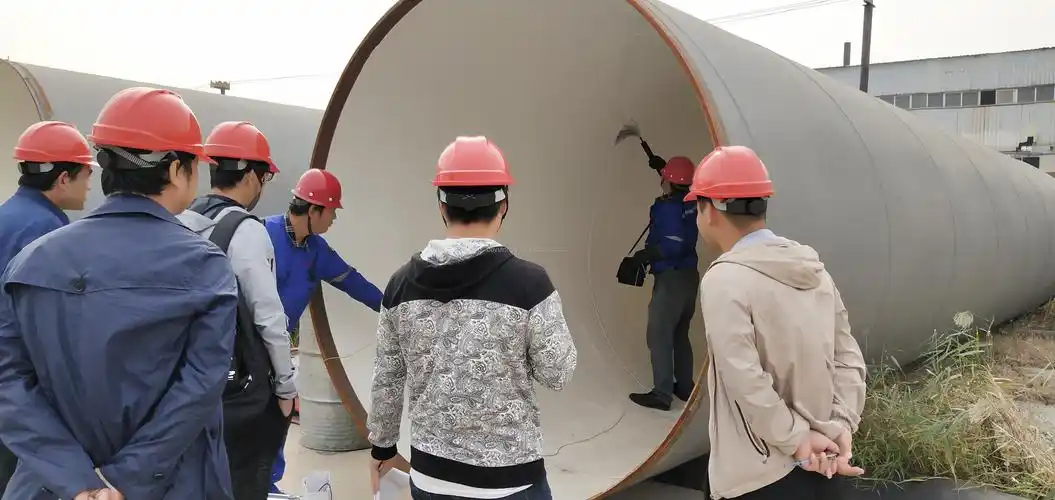
ท่อเหล็ก SAW เส้นผ่านศูนย์กลางขนาดใหญ่ API 5L เกรด B ถือเป็นผลิตภัณฑ์พื้นฐานในภาคพลังงานและโครงสร้างพื้นฐานทั่วโลก, การแสดงทางเทคนิคของความต้องการที่สำคัญในการขนส่งของเหลวปริมาณมากอย่างมีประสิทธิภาพและปลอดภัย ซึ่งมักจะเป็นก๊าซธรรมชาติแรงดันต่ำ, น้ำมันดิบ, หรือสารละลายน้ำ - ซึ่งมีความสามารถในการไหลสูง, กำหนดโดยเส้นผ่านศูนย์กลางขนาดใหญ่, มีการจัดลำดับความสำคัญเหนือความสามารถในการกักเก็บความดันสูงซึ่งมีลักษณะเฉพาะที่สูงกว่า $\text{API 5L}$ เกรดเช่น $\text{X65}$ หรือ $\text{X80}$. การคัดเลือกเกรดบี ($\text{Gr. B}$) เป็นทางเลือกทางเศรษฐกิจและวิศวกรรมโดยเจตนา, การระบุกำลังรับผลผลิตขั้นต่ำที่ระบุขั้นต่ำ ($\text{SMYS}$) ของ $35,000$ ปอนด์ต่อตารางนิ้ว, ซึ่งเป็นระดับความแข็งแกร่งมาตรฐานต่ำสุดภายใน $\text{API 5L}$ ตระกูล, การวางตำแหน่งท่อสำหรับการใช้งานที่ความดันการออกแบบอยู่ในระดับปานกลาง แต่ปริมาณและขนาดที่แท้จริงของโครงการจำเป็นต้องมีขนาดที่ใหญ่โตและประสิทธิภาพการผลิตที่ SAW สามารถจ่ายได้ (การเชื่อมอาร์คแบบจมอยู่ใต้น้ำ) กระบวนการ. ความแข็งแกร่งที่ดูเหมือนต่ำนี้ขัดขวางความเข้มงวดทางเทคนิคของ $\text{API 5L}$ มาตรฐาน, ซึ่งทำให้มั่นใจได้ว่าแม้เกรดระดับฐานนี้ยังต้องผ่านการทดสอบที่เข้มงวดยิ่งขึ้นอีกด้วย, การควบคุมมิติ, และระเบียบการประกันคุณภาพมากกว่าท่อโครงสร้างมาตรฐาน, รับประกันระดับความน่าเชื่อถือที่จำเป็นสำหรับท่อส่งระยะไกล.
ลักษณะเฉพาะที่สำคัญของผลิตภัณฑ์นี้อยู่ที่กระบวนการผลิตเลื่อยเส้นผ่านศูนย์กลางขนาดใหญ่, ซึ่งสนับสนุน LSAW อย่างท่วมท้น (รอยเชื่อมอาร์คจมอยู่ใต้น้ำตามยาว) วิธี, โดยทั่วไปแล้วจะสำเร็จผ่าน UOE ที่ซับซ้อน (U-ing, โอ, และการขยายตัว) หรือ เจซีโออี (j-inten, C-ing, โอ, และการขยายตัว) กระบวนการขึ้นรูป, หรือ สสว (รอยเชื่อมอาร์คจมอยู่ใต้น้ำแบบเกลียว) วิธี, ข้อได้เปรียบทางเศรษฐกิจของทั้งสองวิธีคือความสามารถในการสร้างส่วนท่อที่มีเส้นผ่านศูนย์กลางเกินบ่อยครั้งได้อย่างมีประสิทธิภาพ $\text{NPS 24}$ ขึ้นไป $\text{NPS 60}$ หรือใหญ่กว่า, มักมีความหนาของผนังมาก ($\text{WT}$). ที่ $\text{LSAW}$ กระบวนการ, ซึ่งเกี่ยวข้องกับแผ่นเหล็กขึ้นรูปเย็น (ตัดจากที่กว้างขึ้น $\text{TMCP}$ หรือแผ่นรีดตามอัตภาพ) ให้เป็นทรงกระบอกแล้วเชื่อมตัวเดียว, ตะเข็บตรงทั้งภายในและภายนอกโดยใช้พลังงานสูง, การสะสมสูง **การเชื่อมอาร์คแบบจุ่ม ($\text{SAW}$) ** เทคนิค, ส่งผลให้โครงสร้างจุลภาคมีความสม่ำเสมอและมีความคงตัวของมิติที่ดีเยี่ยม, แต่ต้องใช้เครื่องอัดไฮดรอลิกขนาดใหญ่และเงินลงทุนจำนวนมาก. ในทางกลับกัน, ที่ $\text{SSAW}$ กระบวนการใช้เหล็กม้วนที่แคบกว่า, ม้วนเป็นเกลียวเพื่อสร้างท่อและเชื่อมตะเข็บเกลียว, ให้ความยืดหยุ่นด้านมิติที่มากขึ้นและต้นทุนวัสดุอินพุตที่ต่ำกว่า, แม้ว่าจะนำเสนอความซับซ้อนที่เป็นเอกลักษณ์ของรอยเชื่อมที่ทำมุมกับแกนความเค้นหลัก, ความแตกต่างที่ต้องได้รับการจัดการอย่างระมัดระวังอย่างต่อเนื่อง $\text{NDT}$ (การทดสอบแบบไม่ทำลาย) สำหรับทั้งสองวิธีเพื่อให้มั่นใจถึงความสมบูรณ์สมบูรณ์ของโซนการเชื่อมที่มีปริมาณมาก.
รากฐานทางโลหะวิทยาของวัสดุ API 5L เกรด B, ในขณะที่ง่ายกว่าไมโครอัลลอยด์, สูง-$\text{TMCP}$ เหล็กที่ใช้สำหรับ $\text{X}$ เกรด, ยังคงอยู่ภายใต้ข้อจำกัดองค์ประกอบทางเคมีที่เข้มงวดซึ่งได้รับคำสั่งจาก $\text{API 5L}$, โดยมุ่งเน้นที่การรับประกันความสามารถในการเชื่อมที่ดีเยี่ยมในโรงสีเป็นหลัก $\text{SAW}$ กระบวนการและ, วิกฤต, ในระหว่างการเชื่อมสนามครั้งต่อไปโดยที่ส่วนของท่อจะถูกเชื่อมต่อภายใต้สภาพอากาศที่แปรปรวน. คาร์บอน ($\text{C}$) โดยทั่วไปเนื้อหาจะถูกจำกัดไว้ที่สูงสุด $0.26\%$, และกำมะถัน ($\text{S}$) และฟอสฟอรัส ($\text{P}$) สารตกค้างจะถูกควบคุมอย่างเข้มงวดให้อยู่ในระดับต่ำ ($\text{S} \le 0.015\%, \text{P} \le 0.030\%$) เพื่อลดความเสี่ยงของข้อบกพร่องภายใน เช่น การแยกส่วน และความไวต่อการแตกร้าวที่เกิดจากไฮโดรเจน ($\text{HIC}$), โหมดความล้มเหลวที่อาจเกิดขึ้น, โดยเฉพาะในขนาดใหญ่, อินพุตความร้อนสูง $\text{SAW}$ รอยเชื่อม. การคำนวณ **เทียบเท่าคาร์บอน ($\text{CEq}$) ** ของ $\text{Gr. B}$ เหล็กเป็นตัวชี้วัดทางเทคนิคที่สำคัญ, จงใจเก็บไว้ต่ำเพื่อให้แน่ใจว่าเหล็กยังคงเข้ากันได้สูงกับการทับถมสูง, สภาพแวดล้อมที่มีไฮโดรเจนต่ำ $\text{SAW}$ กระบวนการ, ข้อกำหนดเบื้องต้นสำหรับการบรรลุความแข็งแกร่ง, ต้องใช้ฟิวชั่นที่มีความสมบูรณ์สูงตลอดความยาวของตะเข็บเชื่อมที่มีเส้นผ่านศูนย์กลางขนาดใหญ่.
ข้อกำหนดด้านการทำงานขั้นสูงสุดของท่อขนาดใหญ่นี้คือความสามารถในการกักเก็บแรงดัน, วัดปริมาณตามข้อกำหนดแรงดึงของ $\text{API 5L Gr. B}$, ซึ่งกำหนดขั้นต่ำไว้ $\text{SMYS}$ ของ $35,000 \text{ psi}$ และค่าความต้านทานแรงดึงขั้นต่ำที่กำหนดขั้นต่ำ ($\text{SMTS}$) ของ $60,000 \text{ psi}$. ค่าเหล่านี้ไม่ได้เกิดขึ้นเอง; เป็นพื้นฐานสำหรับการคำนวณแรงดันใช้งานที่ปลอดภัยผ่านสูตรบาร์โลว์ ($\text{P} = 2 \text{t} \times \text{SMYS} \times \text{E} \times \text{F} / \text{OD}$), ที่ไหน $\text{P}$ คือความกดดัน, $\text{t}$ ความหนาของผนังคือ, $\text{E}$ เป็นปัจจัยประสิทธิภาพร่วมกัน, $\text{F}$ เป็นปัจจัยในการออกแบบ, และ $\text{OD}$ คือเส้นผ่านศูนย์กลางภายนอก. แม้กระทั่งสำหรับ $\text{Gr. B}$, การคำนวณนี้กำหนดว่าความแข็งแรงของวัสดุของท่อ, ประกอบกับความหนาของผนัง, เพียงพอที่จะกักเก็บความดันอุทกสถิต โดยที่ความเค้นของห่วงที่เป็นผลลัพธ์ยังคงอยู่ภายในขีดจำกัดความยืดหยุ่น, ตรวจสอบให้แน่ใจว่าท่อไม่มีการเสียรูปเนื่องจากพลาสติกระหว่างการทำงานตามปกติหรือระหว่างการทดสอบอุทกสถิตที่สำคัญ. บังคับ $\text{API 5L}$ โปรโตคอลการทดสอบทำให้มั่นใจได้ว่าข้อกำหนดด้านความแข็งแรงได้รับการตรวจสอบไม่เพียงแต่บนโลหะฐานเท่านั้น แต่ยังรวมถึงความกว้างทั้งหมดของตะเข็บเชื่อม SAW ด้วย, มักจะผ่านการทดสอบแรงดึงตามขวางแบบพิเศษเพื่อให้แน่ใจว่าโลหะเชื่อมและบริเวณที่ได้รับผลกระทบจากความร้อน ($\text{HAZ}$) อย่าตกอยู่ใต้ $\text{SMTS}$ ของวัสดุหลัก, การตรวจสอบคุณภาพการผลิตที่สำคัญ.
ความท้าทายในการผลิตท่อที่มีเส้นผ่านศูนย์กลางขนาดใหญ่ทำให้เกิดข้อจำกัดที่ซับซ้อนที่เกี่ยวข้องกับความคลาดเคลื่อนของมิติและรูปทรง, ซึ่งมีความสำคัญต่อความสมบูรณ์ของท่อพอๆ กับความแข็งแกร่งของวัสดุ. ขนาดที่แท้จริงของท่อช่วยควบคุมการตกไข่ (ความแตกต่างระหว่างสูงสุดและต่ำสุด $\text{OD}$) และความตรงเป็นเรื่องยากมาก, แต่พารามิเตอร์เหล่านี้มีความสำคัญอย่างยิ่งต่อความสำเร็จในการติดตั้งและการเชื่อมภาคสนาม. รูปไข่ที่มากเกินไปทำให้การวางแนวปลายท่อที่อยู่ติดกันสำหรับการเชื่อมเส้นรอบวงเป็นไปไม่ได้หากไม่มีแรงมาก, นำไปสู่ช่องว่างการเชื่อมที่ไม่สม่ำเสมอและข้อบกพร่องในการผ่านรูทที่อาจเกิดขึ้น. ในทำนองเดียวกัน, ความเหลี่ยมปลายท่อและการกำหนดค่ามุมเอียงที่แม่นยำเป็นสิ่งสำคัญ, เนื่องจากการเบี่ยงเบนส่งผลโดยตรงต่อคุณภาพและความสมบูรณ์ของการเชื่อมสนาม, ซึ่งจะต้องดำเนินการได้อย่างน่าเชื่อถือภายใต้ความเค้นคงที่ของท่อ. ที่ $\text{API 5L}$ ข้อมูลจำเพาะกำหนดขีดจำกัดที่เข้มงวดเกี่ยวกับความคลาดเคลื่อนเหล่านี้, และเส้นผ่านศูนย์กลางใหญ่ $\text{SAW}$ ท่อจะต้องถูกวัดและรับรองโดยใช้เกจและอุปกรณ์สแกนเฉพาะทางเพื่อให้แน่ใจว่าทุกเมตรตรงตามมาตรฐาน, ป้องกันความล่าช้าในการก่อสร้างปลายน้ำและการทำงานซ้ำในภาคสนามซึ่งมีค่าใช้จ่ายสูง, คำสั่งทางเทคนิคเชิงปฏิบัติที่สนับสนุนความสำเร็จด้านลอจิสติกส์ทั้งหมดของโครงการไปป์ไลน์.
นอกจากนี้, ความสมบูรณ์ของ $\text{SAW}$ ตะเข็บเชื่อม, ไม่ว่ามันจะเป็นก็ตาม $\text{LSAW}$ หรือ $\text{SSAW}$, ได้รับการยืนยันอย่างเข้มงวด **$100\%$ การทดสอบแบบไม่ทำลาย ($\text{NDT}$) ** โปรโตคอล, ชั้นความปลอดภัยพื้นฐานของ $\text{API 5L}$ มาตรฐาน. ซึ่งโดยทั่วไปเกี่ยวข้องกับการใช้ **การทดสอบอัลตราโซนิกอัตโนมัติ ($\text{AUT}$) ** เพื่อสแกนปริมาตรของรอยเชื่อมทั้งหมด, พยายามตรวจจับข้อบกพร่องภายใน เช่น การขาดฟิวชัน, การรวมตะกรัน, หรือความพรุนภายในที่อาจส่งผลต่อความแข็งแรงในการระเบิดของท่อหรือทำให้เกิดความเสียหายต่อความเมื่อยล้า. สำหรับ $\text{LSAW}$ ท่อ, ตรง, เส้นเชื่อมที่คาดเดาได้ช่วยลดความยุ่งยาก $\text{AUT}$, ในขณะที่ $\text{SSAW}$ ต้องใช้ความซับซ้อนมากขึ้น, การจัดเตรียมทรานสดิวเซอร์แบบทำมุมเพื่อพิจารณาเส้นทางเกลียว. นอกจากนี้, $\text{Radiographic Testing ($\text{X-ray}$ or $\text{Gamma Ray}$) ** is often mandated, particularly at the pipe ends, to verify the weld quality in areas prone to start/stop defects, providing volumetric confirmation of soundness. The combination of these $\text{NDT}$ techniques ensures that the large, high-heat $\text{SAW}$ weld is essentially flaw-free before the pipe leaves the mill, a non-negotiable requirement for a product intended to contain high-pressure, often hazardous, fluids over decades of service.
The final structural proof and assurance of the API 5L Gr. B Large Diameter SAW Pipe is the mandatory, non-destructive Hydrostatic Test. Every single length of pipe is filled with water and pressurized to a level significantly exceeding its $\text{MAOP}$. This test is a crucial mechanical filter, proving the pipe’s elastic strength and revealing any existing flaws in the $\text{SAW}$ weld or the body that are close to the critical size, guaranteeing that the pipe can withstand the design pressure with a high margin of safety. While $\text{Gr. B}$ steel has a lower $\text{SMYS}$ compared to $\text{X}$ grades, its wall thickness is often large enough to achieve the required pressure capacity, and the Hydrostatic Test confirms that this design choice is structurally sound, making the test the ultimate seal of quality for the final large diameter product.
The investment in API 5L Grade B Large Diameter SAW Steel Pipe is not merely a procurement decision; it is a strategic commitment to decades of predictable, high-volume fluid conveyance, underwritten by the most stringent certification system in the global pipeline industry. Our product leverages the immense dimensional capacity inherent in the Submerged Arc Welded (SAW) manufacturing process—the proven backbone for large diameter transmission lines—and combines it with the strategically cost-effective Grade B material, creating a solution that is perfectly optimized for projects where flow capacity is king and operational pressure is moderate. This is the intelligent engineering choice, eschewing the unnecessary expense and fabrication complexity of higher-strength $\text{X}$ grades where the design pressure does not warrant them, thereby delivering the maximum return on investment without compromising the non-negotiable standards of safety and structural integrity demanded by the $\text{API 5L}$ specification. The large diameter capability, whether achieved through the linear precision of LSAW or the material efficiency of SSAW, guarantees that your project achieves the desired throughput, minimizing the frictional head loss and the long-term pumping energy consumption, making the initial investment a powerful predictor of operational efficiency and financial sustainability across the entire lifecycle of the pipeline.
The foundational strength of our offering lies in the **Grade B ($\text{SMYS} = 35,000 \text{ psi}$) ** material, a metallurgical masterpiece of cost-efficiency meticulously controlled to meet the demanding parameters of $\text{API 5L}$ despite its position as the entry-level grade. Our commitment to maintaining an ultra-low **Carbon Equivalent ($\text{CEq}$) ** ensures that every length of our large diameter pipe possesses exceptional weldability, a critical factor that dramatically reduces the complexity, time, and defect rate during the high-stakes field girth welding process, minimizing installation risk and accelerating project schedules. This guaranteed, repeatable weld quality is further reinforced by the inherent reliability of the $\text{SAW}$ process itself, which utilizes a massive, protected arc to deposit high-quality, high-volume weld metal, forming a seam that is consistently stronger and more ductile than the parent material, a technical assurance that is subsequently validated by the unyielding rigor of **$100\%$ Non-Destructive Testing ($\text{NDT}$) **. Every millimeter of the extensive $\text{SAW}$ seam is scanned by Automatic Ultrasonic Testing ($\text{AUT}$), eliminating volumetric defects and guaranteeing a flaw-free pressure boundary that meets or exceeds the uncompromising standards of the American Petroleum Institute, giving our clients absolute, verifiable confidence in the integrity of the pipe they bury.
Furthermore, the operational security of our large diameter $\text{Gr. B}$ pipe is ultimately confirmed by the non-negotiable Hydrostatic Test, a process that transcends simple quality control to become the pipeline’s final, structural Proof of Concept. Each pipe section is individually subjected to internal pressures significantly exceeding the final operating pressure, effectively placing every element—the $\text{Gr. B}$ body steel, the $\text{SAW}$ seam, and the end geometry—under maximum design stress. This rigorous testing filters out any potential flaws or weaknesses, ensuring that the material has achieved its full **Specified Minimum Yield Strength ($\text{SMYS}$) ** guarantee, and providing the ultimate assurance that the pipe will perform reliably under the sustained loads of service for its entire design life. . This commitment to pressure-testing every single length translates directly into risk mitigation for our clients, providing an auditable, quantifiable safety standard that is the hallmark of $\text{API 5L}$ excellence. The impeccable dimensional control of our large diameter product, covering ultra-tight tolerances on ovality, end squareness, and $\text{OD}$, ensures that this structural integrity translates seamlessly into smooth, rapid, and defect-free field installation, providing the necessary precision that high-volume construction projects demand, positioning our API 5L Grade B Large Diameter SAW Steel Pipe as the technically superior and economically advantageous choice for tomorrow’s essential infrastructure.
Structured Technical Specification Data: API 5L Grade B Large Diameter SAW Steel Pipe
| Category | Technical Specification | Typical Requirements & Standards | Technical Significance |
| Material Grade | API 5L Grade B (Gr. B) | $\text{API Specification 5L}$. Common for lower pressure service. | $\text{SMYS}$ (Specified Minimum Yield Strength) Min. $35,000 \text{ psi}$ (240 $\text{MPa}$). Provides base-level pressure containment capacity. |
| Manufacturing Method | SAW (Submerged Arc Welded) | $\text{LSAW}$ (Longitudinal) or $\text{SSAW}$ (Spiral) processes used. | Essential for economically producing Large Diameter Pipe ($\text{NPS 24+}$) with high $\text{WT}$ and high-quality weld seams. |
| Dimensions | Large Diameter, Various WT | $\text{OD}$ typically $\ge \text{NPS 24}$. **Wall Thickness ($\text{WT}$) ** varies based on design pressure requirements. | Large size maximizes flow capacity for high-volume transmission lines. $\text{WT}$ is chosen to meet $\text{MAOP}$ based on $\text{Gr. B}$ strength. |
| Governing Standard | API Specification 5L | Defines material grades, $\text{NDT}$, testing (Hydrostatic, Flattening, Tensile), and dimensional tolerances. | The international standard for line pipe, ensuring safety and integrity in fluid transmission. |
| Chemical Composition | Controlled $\text{CEq}$ | $\text{C}$ Max $0.26\%$. $\text{Mn}$ Max $1.20\%$. $\text{P}$ Max $0.030\%$. $\text{S}$ Max $0.030\%$. | Low $\text{CEq}$ ensures good weldability during the high-heat $\text{SAW}$ process and facilitates easy field welding. |
| Heat Treatment Req. | As-Welded or Normalized | Typically supplied in the $\text{As-Welded}$ condition. Normalizing or stress relief may be required for specific service conditions. | Minimizes residual stresses and ensures the $\text{SAW}$ weld $\text{HAZ}$ microstructure is sound and free from hard zones. |
| Tensile Requirements | SMYS & SMTS | $\text{SMYS}$ Min $35,000 \text{ psi}$. $\text{SMTS}$ Min $60,000 \text{ psi}$. Elongation Min. $23\%$. | Guarantees the necessary strength and ductility for pressure containment and resistance to mechanical failure. |
| Application | Line Pipe (Moderate Pressure) | Transport of water, natural gas, crude oil, and slurry where large flow capacity is required. | Optimized for long-distance, high-volume transmission under moderate pressure and external loads. |
| Features | High Flow Capacity, Weld Integrity | $\text{Features:}$ Excellent $\text{SAW}$ weld quality, high dimensional control, proven $\text{NDT}$ certification. | The large diameter provides immense capacity; $\text{SAW}$ welding ensures the $\text{API 5L}$ integrity for the entire pipe length. |
| Tolerance of $\text{OD}$ and $\text{WT}$ | API 5L Dimensional Tolerances | Ovality and Straightness are tightly controlled. $\text{WT}$ tolerance is typically $\pm 10\%$. $\text{OD}$ tolerance is tight ($\pm 0.5\%$). | Tight control of $\text{OD}$ and ovality is critical for efficient and defect-free field welding fit-up of large pipe sections. |
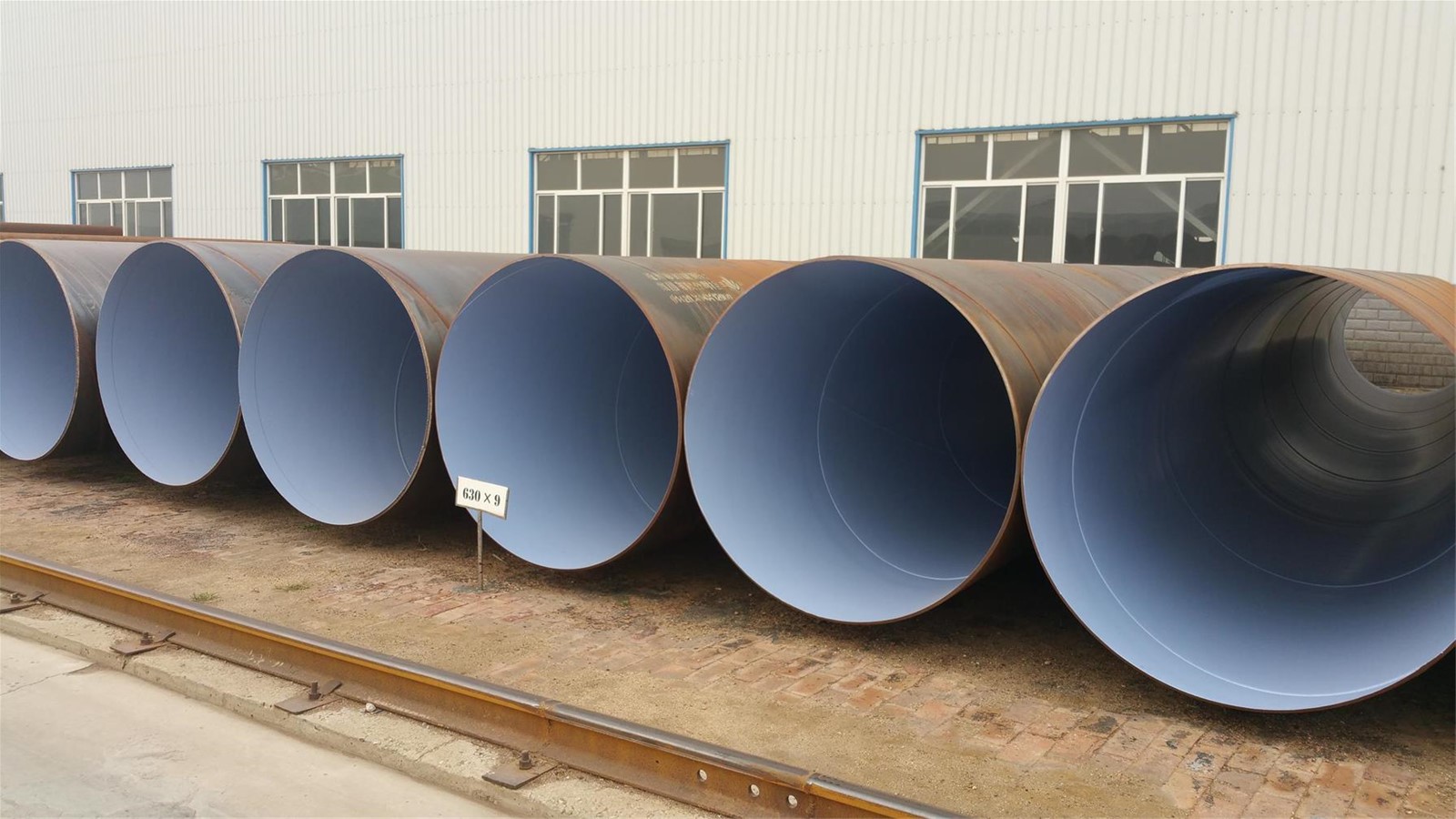
ท่อเหล็กสซอว์, หรือที่เรียกว่าท่อเหล็กเชื่อมส่วนโค้งจมอยู่ใต้น้ำแบบเกลียว, เป็นท่อเหล็กเชื่อมเกลียวที่เกิดจากการเชื่อมอาร์กจุ่มสองด้าน. ท่อเชื่อมแบบเกลียวถูกสร้างขึ้นโดยใช้แผ่นที่แคบกว่าหรือเหล็กแผ่นรีดร้อน, ซึ่งช่วยลดต้นทุนการผลิตได้อย่างมาก. กระบวนการเชื่อมแบบเกลียวช่วยให้สามารถผลิตท่อที่มีเส้นผ่านศูนย์กลางขนาดใหญ่ซึ่งเหมาะสำหรับการขนส่งน้ำมันและก๊าซในปริมาณมาก.
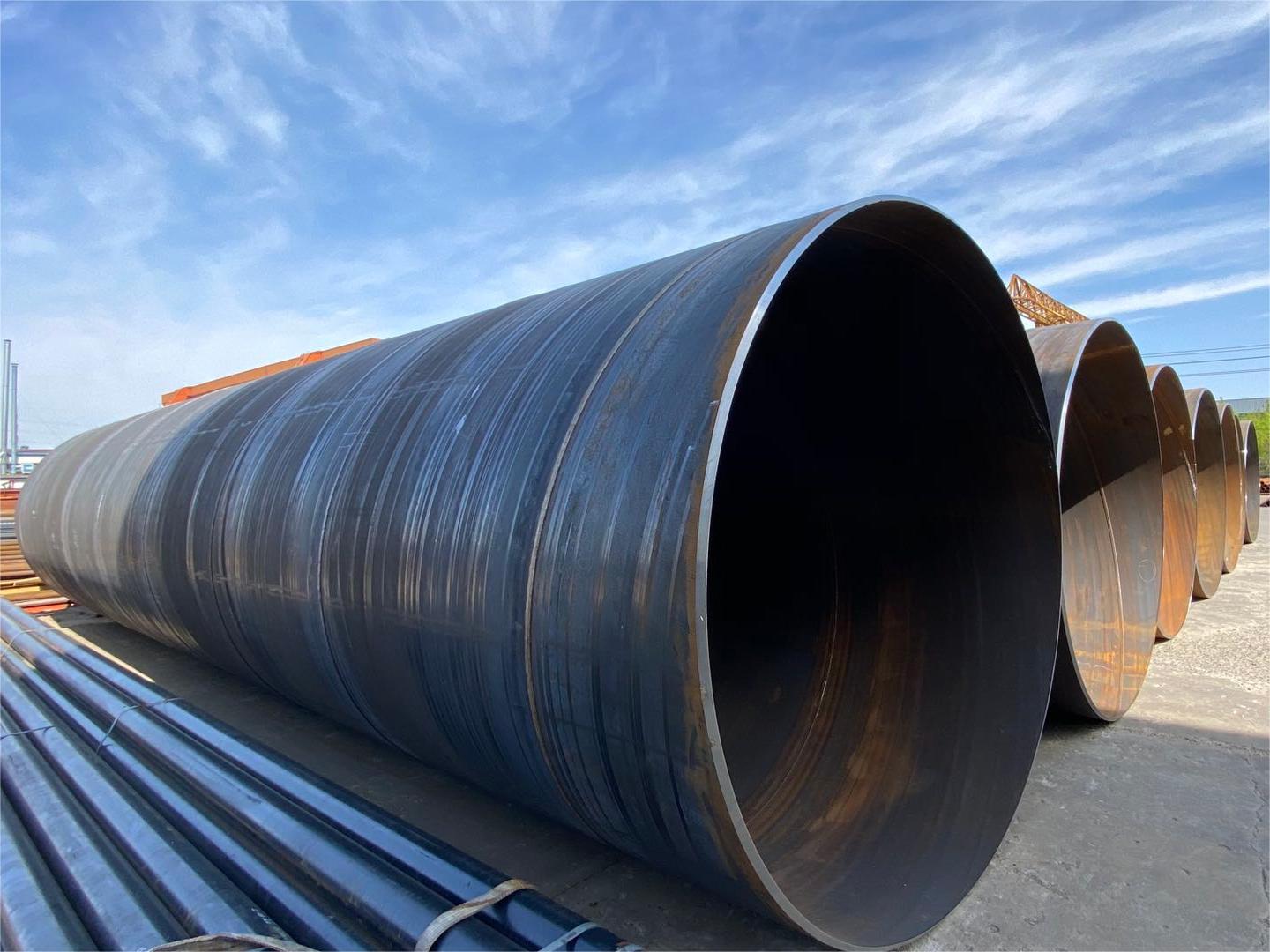
ท่อเหล็ก SSAW นำเสนอโซลูชั่นที่ใช้งานได้จริงสำหรับการใช้งานหลายประเภทที่ต้องการความทนทาน, เส้นผ่านศูนย์กลางใหญ่, และท่อยาว. แม้ว่าจะมีข้อจำกัดบางประการในแง่ของความแม่นยำและโอกาสที่จะเกิดข้อบกพร่อง, ความคุ้มค่าและความแข็งแกร่งทำให้เป็นตัวเลือกยอดนิยมในอุตสาหกรรมต่างๆ. สำหรับการใช้งานเฉพาะด้าน, การเลือกเกรดที่เหมาะสมและปฏิบัติตามมาตรฐานที่เกี่ยวข้องเป็นสิ่งสำคัญอย่างยิ่งเพื่อให้มั่นใจในความปลอดภัยและประสิทธิภาพ.
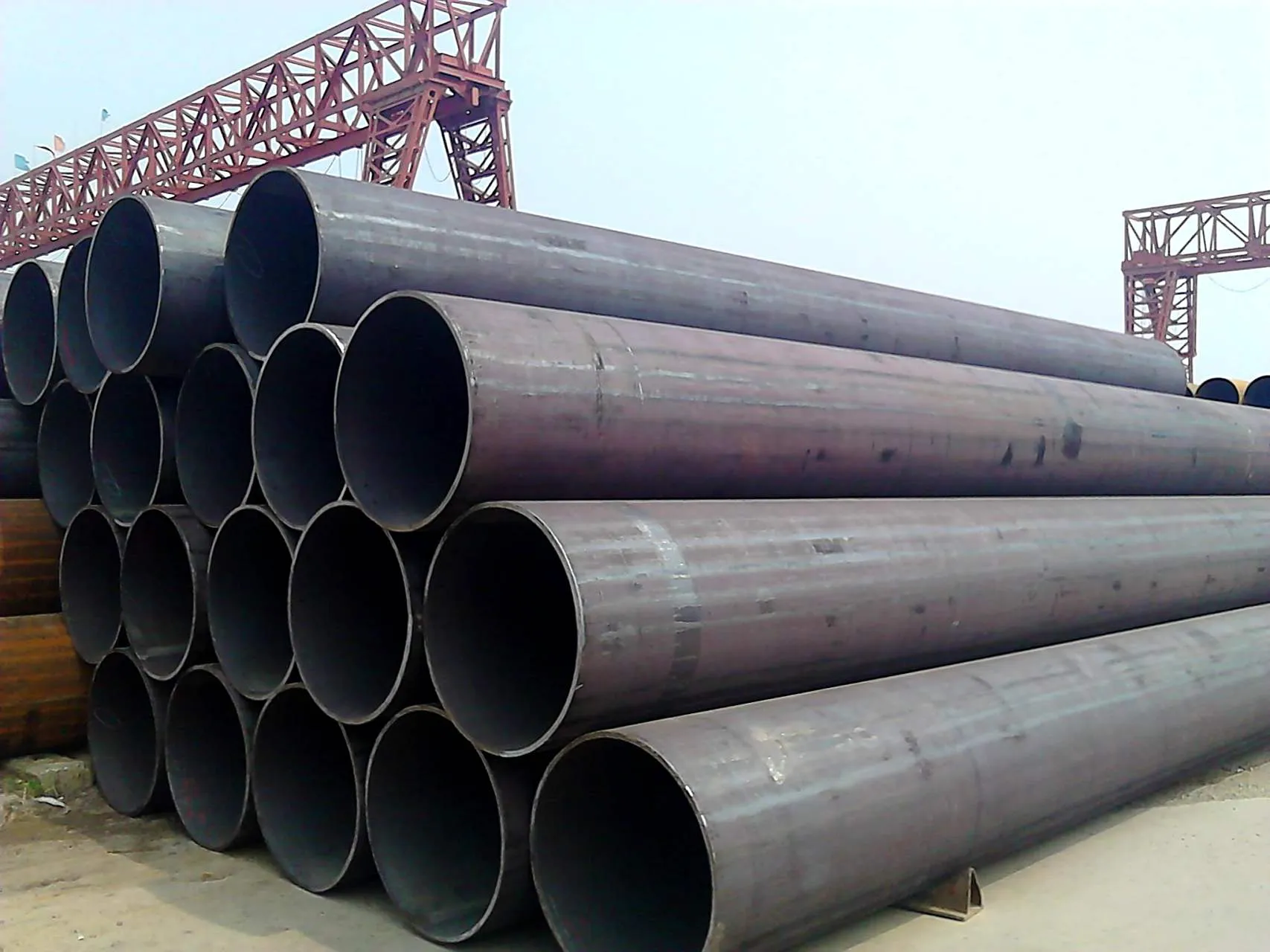
ช่วงของเกรดเหล็กภายใต้ ** en 10219-1** มาตรฐาน-จาก ** S235JRH ที่เชื่อถือได้ ** ผ่านความหลากหลาย ** S355JOH/JEH ** ไปจนถึงประสิทธิภาพสูง ** S460MH **-จัดหาโซลูชันวัสดุที่จำเป็นสำหรับการท้าทายฐานรากลึกทุกครั้ง. มาตรฐานยุโรปนี้รับประกันไม่เพียง แต่คุณสมบัติเชิงกลสูง ** ** (ให้ความแข็งแรงสูงถึง 460 MPa) แต่ยังสำคัญ ** ผลกระทบความเหนียว ** ($\ข้อความ{J0}/\ข้อความ{J2}$) และเหนือกว่า ** weldability ** ผ่านการควบคุมอย่างเข้มงวดของ ** คาร์บอนเทียบเท่า **.
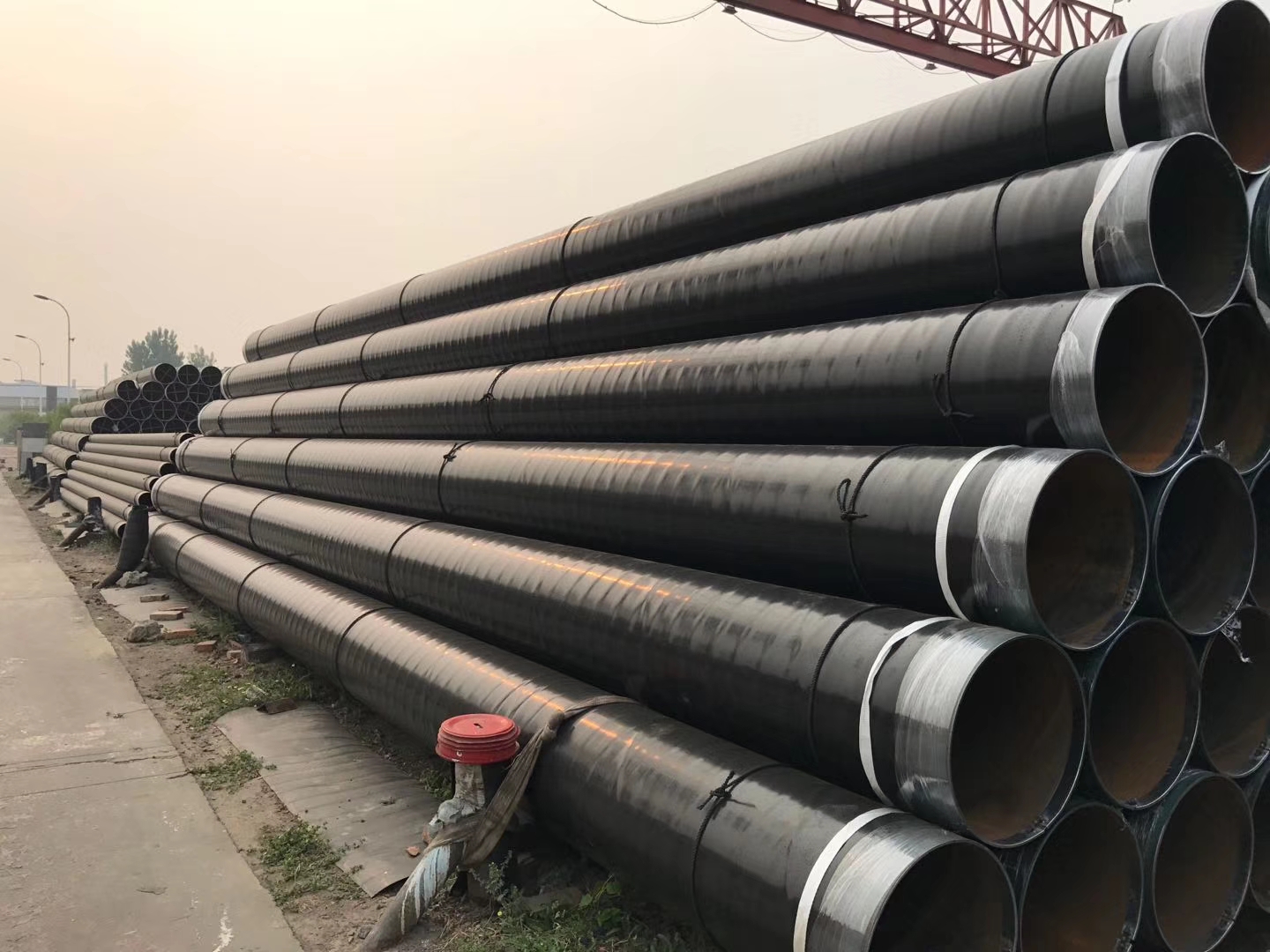
ท่อ SSAW เหล็กกล้าคาร์บอน API 5L เป็นชิ้นส่วนโครงสร้างพื้นฐานทางวิศวกรรมที่มีความเชี่ยวชาญสูง, โซลูชันวัสดุที่กำหนดโดยพื้นฐานไม่ได้จำกัดด้วยข้อจำกัดด้านมิติอย่างง่ายหรือการป้องกันการกัดกร่อนระดับยูทิลิตี้, แต่ด้วยการแสวงหาความแข็งแกร่งอย่างไม่หยุดยั้ง, ความสมบูรณ์ของการเชื่อมที่เชื่อถือได้, และความเหนียวแตกหักเป็นพิเศษ, ทั้งหมดที่จำเป็นเพื่อความปลอดภัย, อย่างต่อเนื่อง, และการลำเลียงไฮโดรคาร์บอนด้วยแรงดันสูง, ก๊าซธรรมชาติ, หรือของเหลวข้นหนาแน่นทั่วภูมิประเทศทางธรณีวิทยาและสิ่งแวดล้อมอันกว้างใหญ่. แตกต่างจากที่คุ้นเคย