Nickel Alloy Seamless Pipe: Manufacturing Process, Standards, and Selection Guide
Nickel-based alloy seamless tubes are among the most critical tube types in the chemical, marine engineering, aerospace, and nuclear power industries. A qualified Inconel 625 or Hastelloy C-276 seamless tube requires triple vacuum melting, forging, glass-lubricated hot extrusion, multi-pass Pilger cold rolling, precision solution heat treatment, and triple non-destructive testing using ultrasonic, eddy current, and hydrostatic pressure—the entire manufacturing cycle takes 4-8 weeks. This article provides a complete selection and procurement guide for nickel-based alloy seamless tubes, covering four dimensions: production process, applicable standards, grade selection, and dimensional tolerances.
I. Core Production Process of Nickel-Based Alloy Seamless Tubes
1.1 From Steel Ingot to Billet – Triple Melting + Forging
Nickel-based alloys have extremely high requirements for purity and homogeneity; the tube blank must be melted using a triple melting process of VIM+ESR+VAR.
Smelting stage
Core mission
Key control indicators
VIM (Vacuum Induction Melting)
Precision alloying + degassing
O₂<30ppm, N₂<50ppm
ESR (Electroslag Remelting)
Desulfurization + removal of impurities
S decreased from 50 ppm to <15 ppm
VAR (Vacuum Arsenic Remelting)
Eliminating segregation + densification
Directional solidification, eliminating central porosity
The steel ingots after triple melting are forged (forging ratio ≥ 4:1, alternating upsetting and drawing) to prepare tube blanks—providing a uniform fine-grained structure for hot extrusion.
1.2 Hot Extrusion Perforation – The “Birth” of Seamless Tubes
The tube blank is heated to 1150-1200℃ and then formed by glass-lubricated hot extrusion. Key points:
Hot extrusion, rather than Mannesmann piercing, must be used —the high Mo/W/Nb content of nickel-based alloys results in high resistance to high-temperature deformation, and the tensile-compressive stress state of Mannesmann piercing makes it extremely easy for cracks to form in the core.
Glass lubricant serves a triple purpose: reducing friction, protecting the surface, and insulating heat.
The extrusion ratio is typically 5:1 to 30:1.
1.3 Multi-pass Pilger cold rolling – precision from millimeters to micrometers
The wall thickness tolerance of hot-extruded tube blanks is approximately ±10%, which must be improved to within ±5% by Pilger cold rolling.
Cold rolling parameters
Typical value
Single-pass diameter reduction rate
30-50%
Single-pass wall reduction rate
20-40%
Total cold rolling passes
2-5 passes
intermediate annealing temperature
1050-1100℃
The variable cross-section die of the Pilger mill applies periodic compressive deformation to the tube blank, resulting in excellent wall thickness uniformity. Small-diameter, thin-walled tubes (OD < 15 mm) are typically cold-drawn instead of cold-rolled.
After cold working, the pipes must undergo solution treatment to restore their plasticity and determine their final mechanical properties.
Brand
Solution temperature
Cooling method
Quenching transfer time
Inconel 625
1095-1205℃
water quenching
<30 seconds
Inconel 600
1010-1150℃
water quenching
<30 seconds
Inconel 601
1100-1200℃
water quenching
<30 seconds
Hastelloy C-276
1120-1160℃
water quenching
<30 seconds
Monel 400
870-980℃
Air cooling/water quenching
—
GH3128
1140-1180℃
water quenching
<30 seconds
Quenching transfer time of less than 30 seconds is a critical control point—the carbide precipitation nose temperature of nickel-based alloys is 650-980℃, and it is necessary to pass through this temperature range within 30 seconds.
II. Comparison of Core Implementation Standards
2.1 ASTM (American Standard) System
Standard number
Scope of application
Typical grades
ASTM B444
UNS N06625 (Inconel 625) Seamless Tube
Inconel 625
ASTM B167
UNS N06600/N06601 Seamless Tube
Inconel 600/601
ASTM B163
Seamless tubes for condensers and heat exchangers
Inconel 600/601/625
ASTM B622
Hastelloy seamless tube
C-276, C-22, B-2, B-3
ASTM B165
Monel 400 seamless tube
Monel 400
ASTM B407
Incoloy 800H/HT seamless tube
Incoloy 800H/800HT
ASTM B423
Incoloy 825 seamless tube
Incoloy 825
ASTM B829
General requirements for nickel-based alloy pipes
All (NDT/Water Pressure/Packaging)
2.2 National Standard (GB) System
Standard number
Scope of application
GB/T 14992
High temperature alloy grades
GB/T 15062
General technical conditions for high temperature alloy pipes
GB/T 12967
Seamless tubes of nickel and nickel alloys
2.3 Differences between US Standards and Chinese Standards
Comparison items
ASTM
GB
upper limit of sulfur content
Stricter (625 requires ≤0.015%)
Some brands are slightly wider
Non-destructive testing requirements
ASTM B829强制UT+ET+HT
Some standards allow for negotiation.
Material certification
EN10204 3.1 is required.
GB system supplier quality certification
International recognition
Globally applicable
Mainly domestic projects
III. Main Grade Selection Guide
3.1 Select according to operating temperature
Operating temperature
Preferred brand
reason
≤650℃, high pressure resistance
Inconel 718/GH4169
γ-phase strengthening, with the highest strength below 650℃.
650-900℃, corrosion resistant
Inconel 625
Mo 9%→PREN 50,耐Cl⁻
800-1000℃
Inconel 600
Classic high-temperature nickel-based alloys
900-1100℃, antioxidant
Inconel 601
The Al₂O₃ sublayer has 3-5 times the antioxidant capacity.
≤650℃, strong reducing acid
Hastelloy C-276
Mo 16%→PREN>55
≤650℃, strong oxidizing acid
Hastelloy C-22
Cr 21% → Oxidation-resistant acid
≤500℃, hydrofluoric acid/seawater
Monel 400
Ni-Cu system is resistant to HF.
950-1100℃
GH3128
W+Mo solid solution strengthening
3.2 Select according to corrosive medium
Corrosive media
Preferred brand
Not recommended
Seawater/Cl⁻
Inconel 625, Monel 400
Inconel 600/601(无Mo)
dilute sulfuric acid
Hastelloy C-276
Inconel 600/601
Nitric acid
Hastelloy C-22, Inconel 601
Monel (copper is not resistant to HNO₃)
hydrochloric acid
Hastelloy B-3, C-276
Any Cr-containing alloy
hydrofluoric acid
Monel 400
Any Cr-containing alloy
NaOH alkaline solution
Inconel 600
Inconel 601 (Al dissolves in alkali)
High-temperature sulfur-containing flue gas
Inconel 601
Monel (not heat resistant)
IV. Dimensional Tolerances and Technical Conditions
4.1 Common Specification Range
parameter
scope
Outer diameter (OD)
6-325mm
Wall thickness (WT)
0.5-30mm
length
Standard length 3-12m (maximum 15m)
Surface condition
Bright solution treatment, pickling, polishing
4.2 Dimensional Tolerances (ASTM B829)
Outer diameter range
outer diameter tolerance
Wall thickness tolerance
OD ≤ 12.7mm
±0.13mm
±10%
12.7 < OD ≤ 38.1mm
±0.19mm
±10%
38.1 < OD ≤ 88.9mm
±0.25mm
±10%
OD > 88.9mm
±0.38mm
±10%
The wall thickness tolerance of cold-rolled tubes is usually better than ±5% (internal control standard of the enterprise).
4.3 List of Mandatory Inspection Items
Inspection items
method
Implementation Standards
chemical composition
OES spectral analysis
ASTM E1473
room temperature stretching
Universal testing machine
ASTM E8
hardness
HRB/HV
ASTM E18/E92
Flaring test
Tapered flare, flare ratio ≥30%
ASTM B829
Flattening test
Press to the specified spacing
ASTM B829
Ultrasonic testing (UT)
Pulse-reflection method
ASTM E213
Eddy current testing (ET)
Differential coil method
ASTM E426
Hydrostatic test (HT)
1.5 times the design pressure
ASTM B829
Grain size
Metallography
ASTM E112
Intergranular corrosion
ASTM G28 A法
Optional (recommended for chemical engineering professionals)
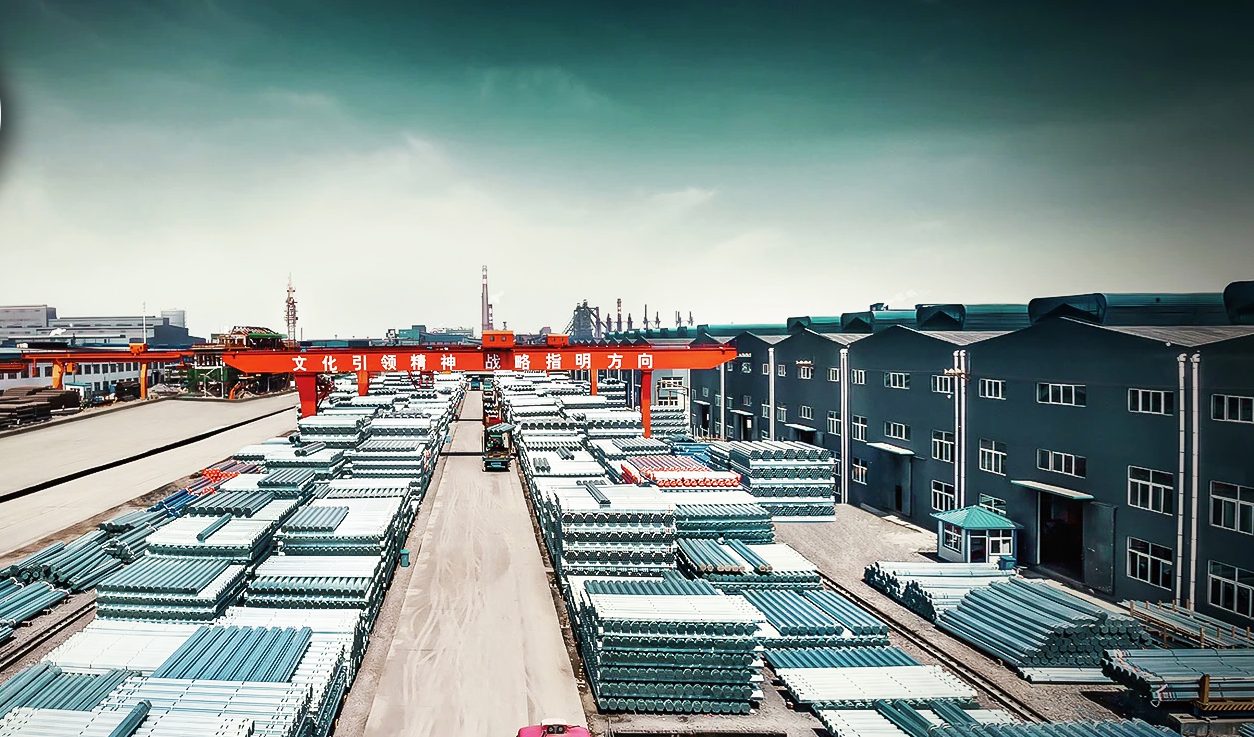
ERW BLACK Pipes. Electric Resistance Welded (ERW) Pipes are manufactured from Hot Rolled Coils / Slits. All the incoming coils are verified based on the test certificate received from steel mill for their chemistry and mechanical properties. ERW pipe is cold-formed into a cylindrical shape, not hot-formed.
Seamless pipe is manufactured by extruding the metal to the desired length; therefore ERW pipe have a welded joint in its cross-section, while seamless pipe does not have any joint in its cross-section through-out its length. In Seamless pipe, there are no welding or joints and is manufactured from solid round billets.
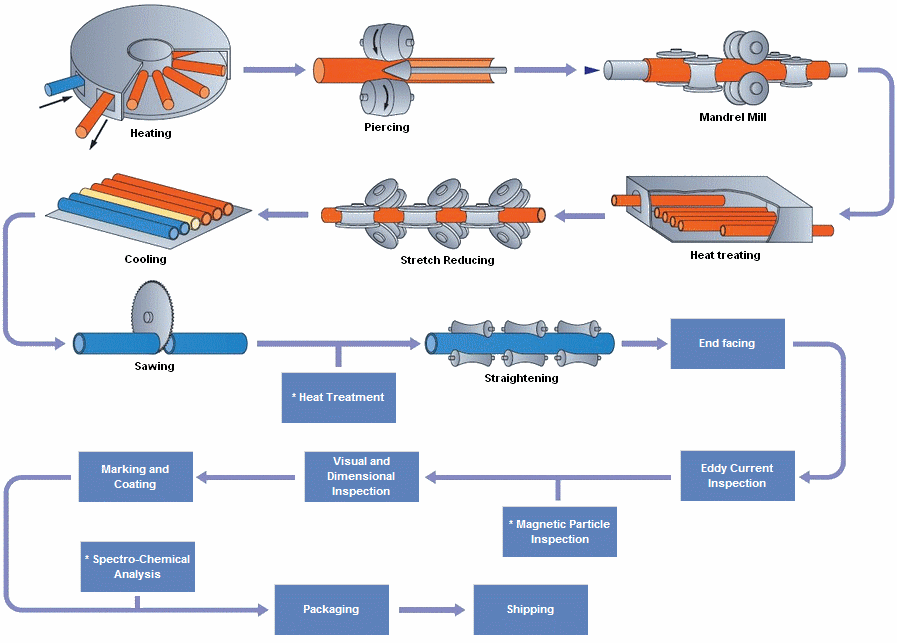
Seamless pipes are manufactured using a piercing process, where a solid billet is heated and pierced to form a hollow tube. Welded pipes, on the other hand, are formed by joining two edges of steel plates or coils using various welding techniques.
Carbon steel pipe is highly resistant to shock and vibration which making it ideal to transport water, oil & gas and other fluids under roadways. Dimensions Size: 1/8″ to 48″ / DN6 to DN1200 Thickness: Sch 20, STD, 40, XS, 80, 120, 160, XXS Type: Seamless or welded pipe Surface: Primer, Anti rust oil, FBE, 2PE, 3LPE Coated Material: ASTM A106B, A53, API 5L B, X42, X46, X52, X56, X60, X65, X70 Service: Cutting, Beveling, Threading, Grooving, Coating, Galvanizing
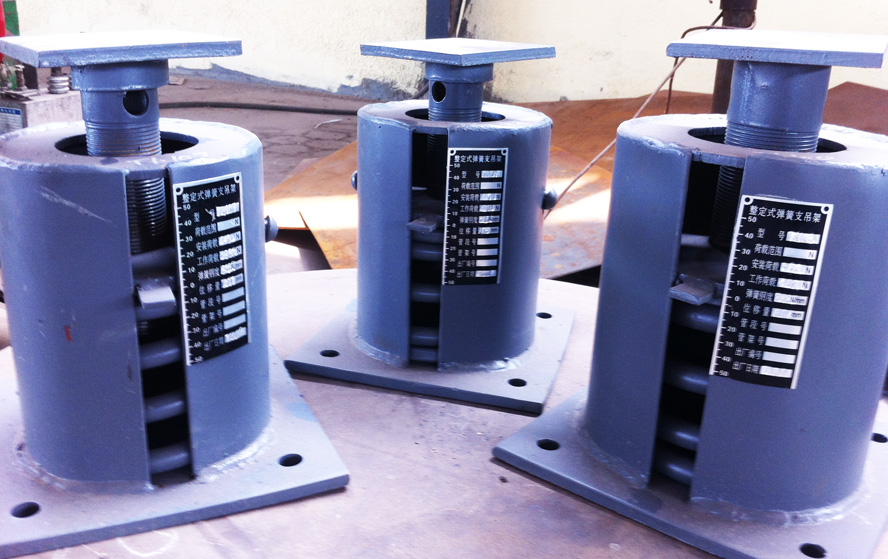
Type A- Used where ample head room is available. Specific elevation is desirable. Type B- Used where headroom is limited. Head attachment is a single lug. Type C- Used where headroom is limited. Head attachment is side by side lugs